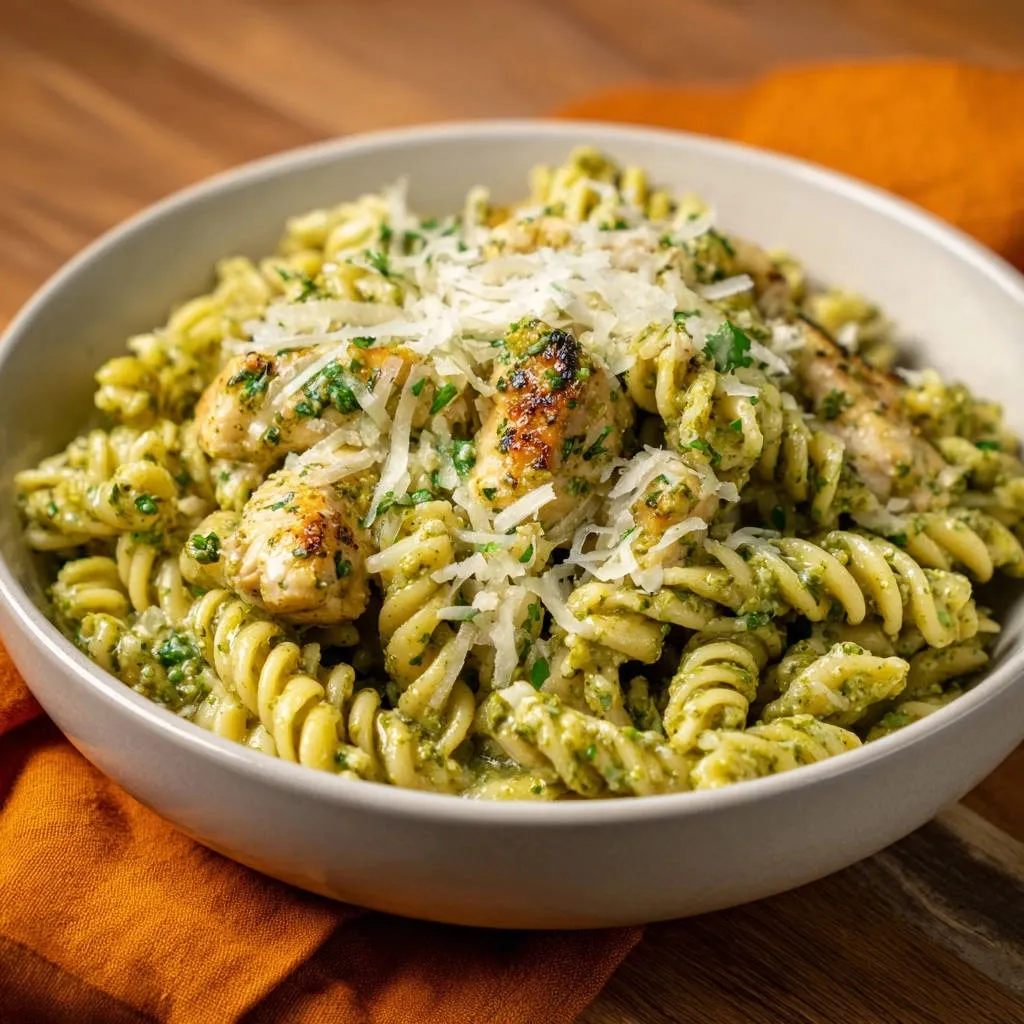
Ever found yourself staring down a plate of Pesto Chicken Pasta that promised creamy perfection but delivered a clumpy, dry mess? I’ve been there, and it’s truly disappointing when the sauce just won’t cling.
This recipe transforms that frustration into triumph, offering simple yet powerful techniques to guarantee perfectly al dente noodles and a silky, emulsified sauce every single time. Get ready for a weeknight Pesto Chicken Pasta that impresses with minimal effort!
Beyond Basic: The Pesto Chicken Pasta Recipe That Truly Clings
This isn’t just another pasta recipe; it’s a masterclass in texture and flavor. We’re focusing on specific methods that elevate your Pesto Chicken Pasta from good to utterly unforgettable.
For more tender chicken, explore how to achieve a fluffy texture with cheesy skillet gnocchi.
You’ll discover how simple kitchen hacks can prevent common pasta pitfalls. The result is a dish where every bite delivers tender chicken, perfectly coated pasta, and vibrant pesto flavor.
The “No-Gummy” Pasta Promise: Al Dente Every Time
Gummy pasta is a common culinary woe, often caused by overcrowding or insufficient salting. Our technique ensures your noodles are perfectly firm to the bite, never sticky or bland.
By using a generous amount of salted boiling water and immediate stirring, each fusilli strand cooks individually. This precise method guarantees that delightful al dente texture, making all the difference.
Effortless Silky Sauce: The Cling Factor Revealed
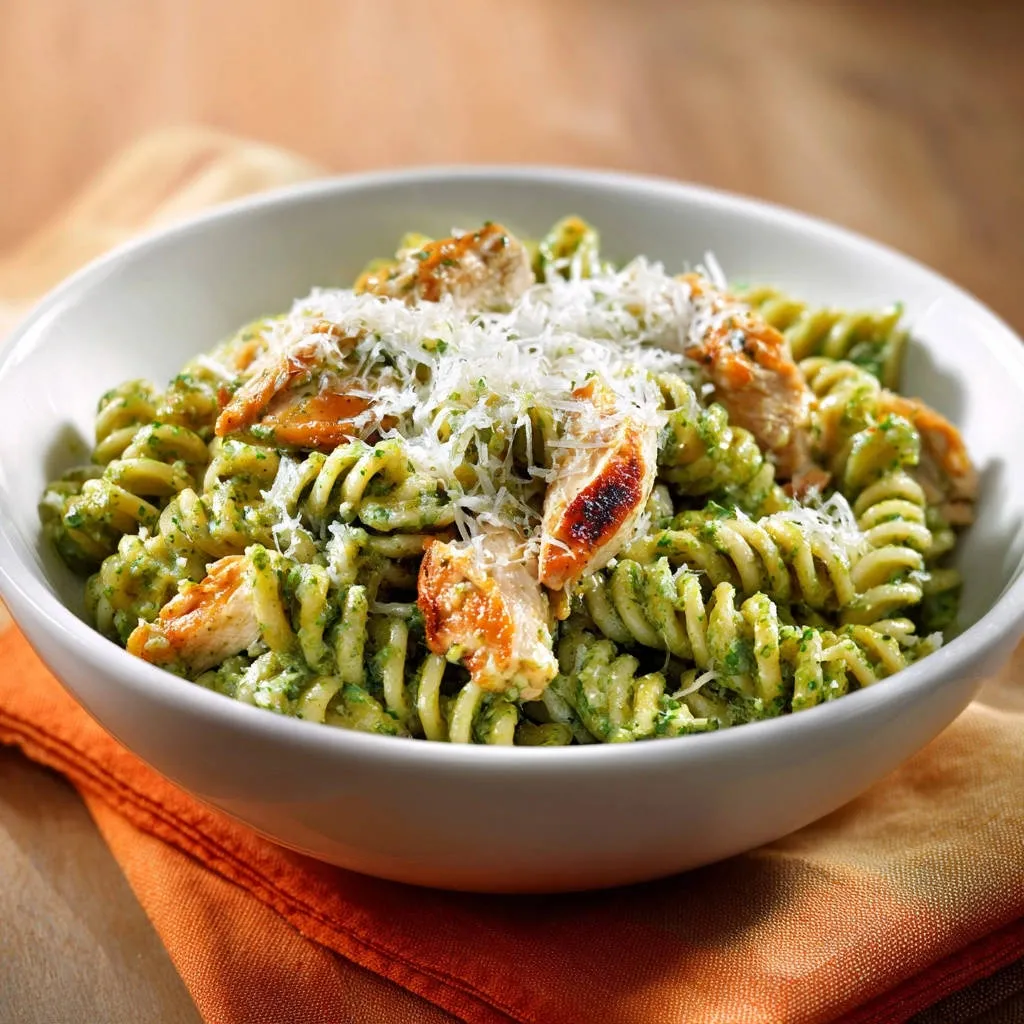
The secret to a luscious, non-watery sauce lies in one often-discarded ingredient: starchy pasta water. This “liquid gold” is the emulsifier that binds the pesto and chicken beautifully.
It creates a velvety sauce that clings perfectly to every noodle, delivering rich flavor without being overly oily. This simple trick ensures a restaurant-quality finish for your Pesto Chicken Pasta.
Flavorful & Fast: A Weeknight Pesto Chicken Pasta Win
Despite its sophisticated results, this Pesto Chicken Pasta is surprisingly quick to prepare. It’s designed for busy evenings when you crave something special without a lengthy cooking process.
From seasoning the chicken to combining the sauce, each step is efficient and impactful. You’ll have a wholesome, flavor-packed meal on the table in under 30 minutes, making it a true weeknight champion.
Crafting Flavor: Essential Ingredients for Pesto Chicken Pasta
The Heart of the Dish: Pasta & Protein
Fusilli pasta, with its corkscrew shape, is ideal for catching and holding the sauce. This ensures every bite of your Pesto Chicken Pasta is coated in flavor.
Boneless, skinless chicken breast offers a lean and versatile protein. It cooks quickly and absorbs seasonings beautifully, providing a tender counterpoint to the vibrant pesto.
For juicy chicken every time, consider trying our grilled pesto chicken pasta recipe.
The Sauce Whisperers: Pesto & Parmesan
Prepared basil pesto is the backbone of the sauce, offering rich, herbaceous flavor and a vibrant green hue. Opt for a high-quality brand for the best taste.
Grated Parmesan cheese adds a salty, umami depth and contributes to the sauce’s creaminess. Freshly grated Parmesan melts more smoothly and offers superior flavor compared to pre-shredded varieties.
Seasoning for Impact: Bringing Out the Best
Salt and black pepper are fundamental for enhancing the chicken’s natural flavors. They lay a crucial foundation for the overall dish.
Garlic powder and onion powder provide a mellow, aromatic base for the chicken. These pantry staples ensure the chicken itself is flavorful, not just a vehicle for the pesto.
Foundation & Finish: Olive Oil & Fresh Herbs
Olive oil is essential for searing the chicken to a golden perfection. It also adds a subtle richness that complements the pesto.
Fresh parsley, chopped and added at the end, provides a burst of freshness and a beautiful green garnish. It brightens the entire Pesto Chicken Pasta experience.
Essential Kitchen Companions for Pesto Chicken Pasta Success
Large Pot: Crucial for proper pasta cooking. Ample space allows the pasta to move freely, preventing sticking and ensuring even cooking to that perfect al dente texture.
Large Skillet: For browning the chicken evenly. A spacious skillet allows you to cook the chicken in a single layer, promoting delicious browning rather than steaming, which builds flavor.
Slotted Spoon or Spider: For easy pasta transfer and reserving water. This tool helps you efficiently scoop pasta while leaving the starchy cooking water behind for your sauce.
Measuring Cups & Spoons: For accurate ingredient amounts. Precision in quantities ensures consistent flavor and texture in your Pesto Chicken Pasta every time.
Sharp Knife & Cutting Board: For efficient chicken prep. A sharp knife ensures clean, uniform cuts, which is vital for even cooking of the chicken pieces.
Your Path to Pesto Chicken Pasta Perfection: A Detailed Guide
Prepping for Success: Season & Cut the Chicken
Cut your boneless, skinless chicken breast into uniform 1-inch pieces. This ensures even cooking throughout, preventing some pieces from drying out.
Generously season the chicken with salt, black pepper, garlic powder, and onion powder. Don’t be shy; this is where a lot of foundational flavor for your Pesto Chicken Pasta comes from!
Searing to Golden Perfection: Cooking the Chicken
Heat 1 tablespoon of olive oil in a large skillet over medium-high heat. Ensure the oil is shimmering before adding chicken, indicating it’s hot enough for a good sear.
Add chicken pieces in a single layer, making sure not to overcrowd the pan. Cook in batches if necessary; overcrowding lowers the pan temperature and steams the chicken instead of browning it.
Cook for 3-4 minutes per side, until golden brown and cooked through. Remove the chicken from the skillet and set it aside; its flavorful juices will be reincorporated later into your Pesto Chicken Pasta.
The Al Dente Secret: Cooking Pasta for Optimal Texture
In a very large pot, bring at least 4-6 quarts of water to a rolling boil. Ample water is key to preventing the pasta from sticking together and allows it to cook evenly.
Add a generous amount of salt to the boiling water-it should taste noticeably salty, like the ocean. This seasons the pasta from within, ensuring a flavorful foundation for your dish.
Add the fusilli pasta and stir immediately to prevent the noodles from sticking together. Continue stirring occasionally as it cooks to maintain separation.
Cook according to package directions until the pasta is perfectly al dente (firm to the bite). This precise cooking, combined with salted water and immediate stirring, guarantees a non-gummy, delightful texture.
The Golden Reserve: Pasta Water’s Hidden Power
Before draining the pasta, reserve 1 cup of the starchy pasta cooking water. This liquid gold is absolutely critical for achieving a silky, emulsified sauce that perfectly clings to every noodle.
Building the Base: Combining Pasta, Pesto, & Chicken
Drain the pasta well, but do NOT rinse it. Rinsing removes the essential starch needed for the sauce to cling properly, resulting in a less cohesive dish.
Return the hot, drained pasta to the large pot. Add the prepared basil pesto sauce and the cooked chicken to the pasta, ready for the magic to happen.
The Emulsification Magic: Creating a Silky, Clingy Sauce
Gradually add the reserved pasta water, a few tablespoons at a time, stirring constantly. The hot pasta, pesto, and starchy water will emulsify beautifully, creating a creamy texture.
Continue adding pasta water until your desired sauce consistency is reached – smooth, silky, and perfectly coating every noodle without being watery or overly oily. This step is key to a luscious Pesto Chicken Pasta.
The Grand Finale: Finishing Touches & Serving
Stir in 1/2 cup of grated Parmesan cheese and 1/4 cup of chopped fresh parsley. These additions enhance flavor, add a touch of saltiness, and provide a pop of color.
Taste and adjust seasoning if needed. Serve your Pesto Chicken Pasta immediately, garnished with extra Parmesan and fresh parsley for a beautiful and aromatic presentation.
Chef’s Wisdom: Elevate Your Pesto Chicken Pasta Game
Master the Salted Water: Don’t underestimate the power of generously salted pasta water. It’s the only chance to season the pasta itself from within, ensuring a flavorful foundation for your Pesto Chicken Pasta, not just a blank canvas.
The “Don’t Rinse” Rule: Never rinse your pasta! The starches on the surface are what help the sauce adhere beautifully. Rinsing washes away this crucial element, making for a slippery, less flavorful dish.
Uniform Chicken Pieces: Cutting your chicken into even 1-inch pieces ensures it cooks at the same rate. This prevents some pieces from drying out while others are still undercooked, leading to perfectly tender chicken throughout.
Don’t Overcrowd the Pan: When cooking the chicken, sear in batches if necessary. Overcrowding lowers the pan temperature and steams the chicken instead of browning it, leading to less flavor and an unappealing texture.
Adjust Pasta Water as Needed: The amount of pasta water needed can vary depending on your pasta and desired sauce thickness. Start with a few tablespoons and add more gradually until you reach your desired luxurious, clingy sauce consistency for your Pesto Chicken Pasta.
Pesto Chicken Pasta Perfection: Common Fixes & Solutions
Problem: Sauce is too thin or watery.
Solution: You might have added too much pasta water too quickly, or your pasta wasn’t drained thoroughly. If it’s too thin, you can try simmering it gently for a minute or two to reduce, or add a little more Parmesan cheese to thicken. In the future, add pasta water very gradually, a tablespoon at a time.
Problem: Sauce is too thick or dry.
Solution: This usually means you didn’t use enough reserved pasta water, or the pasta absorbed it all as it sat. You can still save it! Gently reheat the pasta with a tablespoon or two of warm water (or even chicken broth) until it reaches your desired consistency. Stir continuously to re-emulsify the sauce.
Problem: Chicken is dry or rubbery.
Solution: Overcooked chicken is the culprit. Ensure you cook the chicken just until it’s golden brown and cooked through (3-4 minutes per side), then remove it promptly from the heat. Uniformly cut pieces also help prevent some parts from overcooking while others are still raw.
Problem: Pasta is clumpy or sticky.
Solution: This is often due to not enough water in the pot, not enough salt in the water, or not stirring immediately after adding the pasta. For future attempts, use a very large pot with ample, generously salted boiling water, and stir the pasta right when it goes in and occasionally thereafter.
Your Top Pesto Chicken Pasta Questions, Answered
Can I use a different type of pasta?
Absolutely! While fusilli is great for catching sauce, feel free to use other short pasta shapes like penne, rotini, farfalle (bow-tie), or even a longer pasta like spaghetti or linguine. Just adjust cooking times according to package directions for your chosen variety.
Can I make my own pesto instead of using prepared?
Yes, homemade pesto is fantastic and often more vibrant! If using homemade, you might need to adjust the amount of olive oil as homemade pesto can sometimes be richer or thicker than store-bought. Follow the same steps for combining with the pasta and chicken.
How can I make this Pesto Chicken Pasta spicier?
For a kick, you can add a pinch of red pepper flakes to the chicken seasoning, or stir them into the sauce with the pesto. A drizzle of chili oil at serving can also provide a nice heat and enhance the flavor profile.
Is there a way to add more vegetables?
Definitely! You can sauté some cherry tomatoes, spinach, asparagus, or bell peppers with the chicken to add more depth and nutrition. Alternatively, stir in blanched broccoli florets or peas with the pesto for added color and texture.
Can I prepare Pesto Chicken Pasta ahead of time?
While best served fresh, you can cook the chicken and pasta separately a day ahead. Store them in airtight containers in the refrigerator. When ready to serve, gently reheat the pasta and chicken, then combine with pesto and a splash of reserved pasta water (or plain water/broth) to create the sauce.
Beyond the Bowl: Serving & Storing Your Pesto Chicken Pasta
Creative Serving Suggestions
This Pesto Chicken Pasta is a hearty meal on its own, satisfying and flavorful. It pairs wonderfully with a simple side salad dressed with a light vinaigrette for freshness.
What to Try Next
Round out your pesto chicken pasta spread with these complementary dishes.
- For a fresh, slightly sweet vegetable, consider these crispy parmesan roasted zucchini, pairing well with the herbaceous pesto.
- Add a vibrant salad with these shredded Brussels sprout salad, its crunch and sweetness balancing the creamy pasta.
Some crusty garlic bread is perfect for soaking up any extra sauce, ensuring no delicious drop is left behind. A glass of white grape juice or a light-bodied red would also complement the vibrant flavors beautifully.
Storing Leftovers Safely
Store any leftover Pesto Chicken Pasta in an airtight container in the refrigerator for up to 3-4 days. Ensure it cools completely before refrigerating to maintain quality and safety, preventing bacterial growth.
Reheating for Best Results
To reheat, place the leftovers in a skillet over medium-low heat, adding a splash of water or chicken broth to loosen the sauce and prevent it from drying out. Stir gently until warmed through.
Alternatively, microwave in short bursts, stirring in between, until heated evenly. This method helps prevent the pasta from becoming tough or rubbery.
Ready to Create Your Own Pesto Chicken Pasta Masterpiece?
With these expert tips and precise steps, you’re now equipped to create a Pesto Chicken Pasta that defies all expectations. No more gummy noodles or bland, separated sauces for you!
Embrace the simple magic of perfectly cooked pasta and an emulsified, clingy sauce. Dive into this recipe tonight, and prepare to savor every forkful of this truly exceptional dish. Your kitchen is about to become a testament to culinary success!
Pesto Chicken Pasta
Course: Main CourseCuisine: Italian-AmericanDifficulty: easy4
servings15
minutes25
minutes750
kcal40
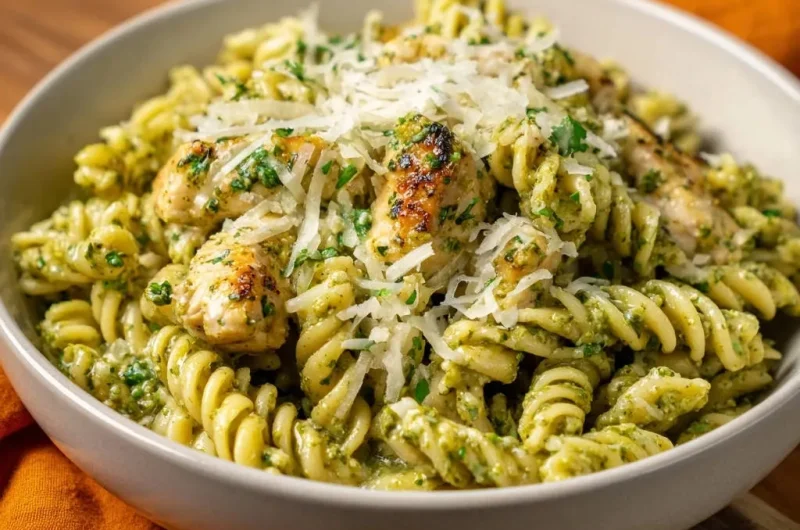
minutesCraving pasta that isn’t a sticky, clumpy mess? This Pesto Chicken Pasta recipe reveals the simple trick to perfectly al dente noodles and a silky, clinging sauce. Enjoy a flavorful and satisfying meal with every bite.
Ingredients
1 pound fusilli pasta
1.5 pounds boneless, skinless chicken breast, cut into 1-inch pieces
1 cup prepared basil pesto
1/2 cup grated Parmesan cheese, plus more for garnish
1/4 cup fresh parsley, chopped, plus more for garnish
2 tablespoons olive oil
Salt, to taste
Black pepper, to taste
Garlic powder, to taste
Onion powder, to taste
Directions
- Prep Chicken: Cut chicken breast into uniform 1-inch pieces. Season generously with salt, black pepper, garlic powder, and onion powder.
- Cook Chicken: Heat 1 tablespoon olive oil in a large skillet over medium-high heat. Add chicken pieces in a single layer, making sure not to overcrowd the pan. Cook for 3-4 minutes per side, until golden brown and cooked through. Remove chicken from skillet and set aside.
- Cook Pasta (The Secret to No More Gummy Pasta): In a very large pot, bring at least 4-6 quarts of water to a rolling boil. Add a generous amount of salt to the boiling water (it should taste noticeably salty, like the ocean). Add the fusilli pasta and stir immediately to prevent the noodles from sticking together. Cook according to package directions, stirring occasionally, until the pasta is al dente (firm to the bite). This precise cooking to al dente, coupled with ample salted water and immediate stirring, is key to its texture.
- Reserve Pasta Water: Before draining, reserve 1 cup of the starchy pasta cooking water. This water is critical for achieving a silky, clinging sauce and preventing a dry or watery result.
- Combine Sauce: Drain the pasta well, but do not rinse it. Rinsing removes the starch needed for the sauce to cling. Return the hot pasta to the large pot. Add the pesto sauce and the cooked chicken to the pasta.
- Create Silky Sauce (The Emulsification Trick): Gradually add the reserved pasta water, a few tablespoons at a time, stirring constantly. The hot pasta, pesto, and starchy water will emulsify as you stir, creating a beautiful, smooth, and silky sauce that clings perfectly to every noodle without being watery or overly oily. Continue adding pasta water until the desired sauce consistency is reached.
- Finish and Serve: Stir in 1/2 cup grated Parmesan cheese and 1/4 cup chopped fresh parsley. Taste and adjust seasoning if needed. Serve immediately, garnished with extra Parmesan and fresh parsley.
Notes
- Features expert tips for perfectly al dente, non-gummy pasta and a silky, clinging pesto sauce.