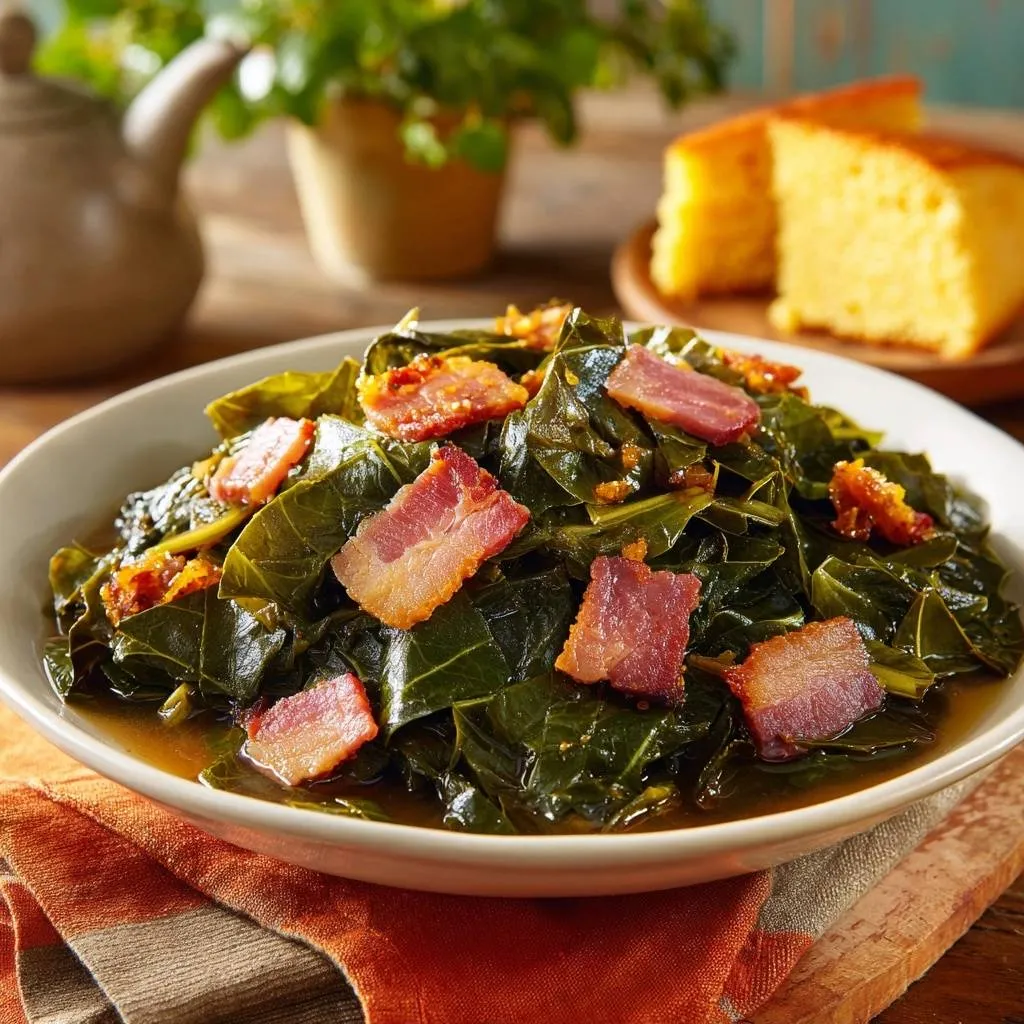
Picture this: tough, stringy collard greens that fight your fork at every holiday table. But not anymore. This Southern Collard Greens with Bacon recipe turns those chewy leaves into silky, flavorful perfection with a foolproof stem removal and a bacon-infused low-slow braise. You’ll have tender Southern Collard Greens with Bacon on the table that steal the show.
Why does this work so well? The bacon fat renders deep flavor while the long simmer breaks down every tough fiber. However, it doesn’t stop there. Fresh collards shine brightest, and that apple cider vinegar adds just the right tang to balance the richness.
Here’s the pro tip that sets this apart: strip out those thick center ribs completely before chopping. They are packed with cellulose that stays chewy no matter what. Do this, and your Southern Collard Greens with Bacon hit fork-tender bliss every time. Serves 6-8, with 20 minutes prep, 1.5 hours cook time, and about 150 calories per serving.
Roots of Southern Collard Greens with Bacon
Collard greens trace back to West African traditions, where greens simmered long and slow with whatever fat was on hand. African Americans brought those methods to the South, turning them into soul food staples after the Civil War. Bacon stepped in as the star, thanks to abundant hog farming across the region.
In addition, low-sodium chicken broth keeps things balanced today. It lets the natural flavors pop without overwhelming saltiness. Therefore, you get that authentic taste with a nod to healthier twists.
From Fields to Holiday Tables
Collards thrived in Gullah-Geechee kitchens along the coast, often paired with black-eyed peas for New Year’s luck. Families gathered around big pots, letting them simmer all day. This tradition lives on at every soul food spread.
Bacon’s Essential Role in Tradition
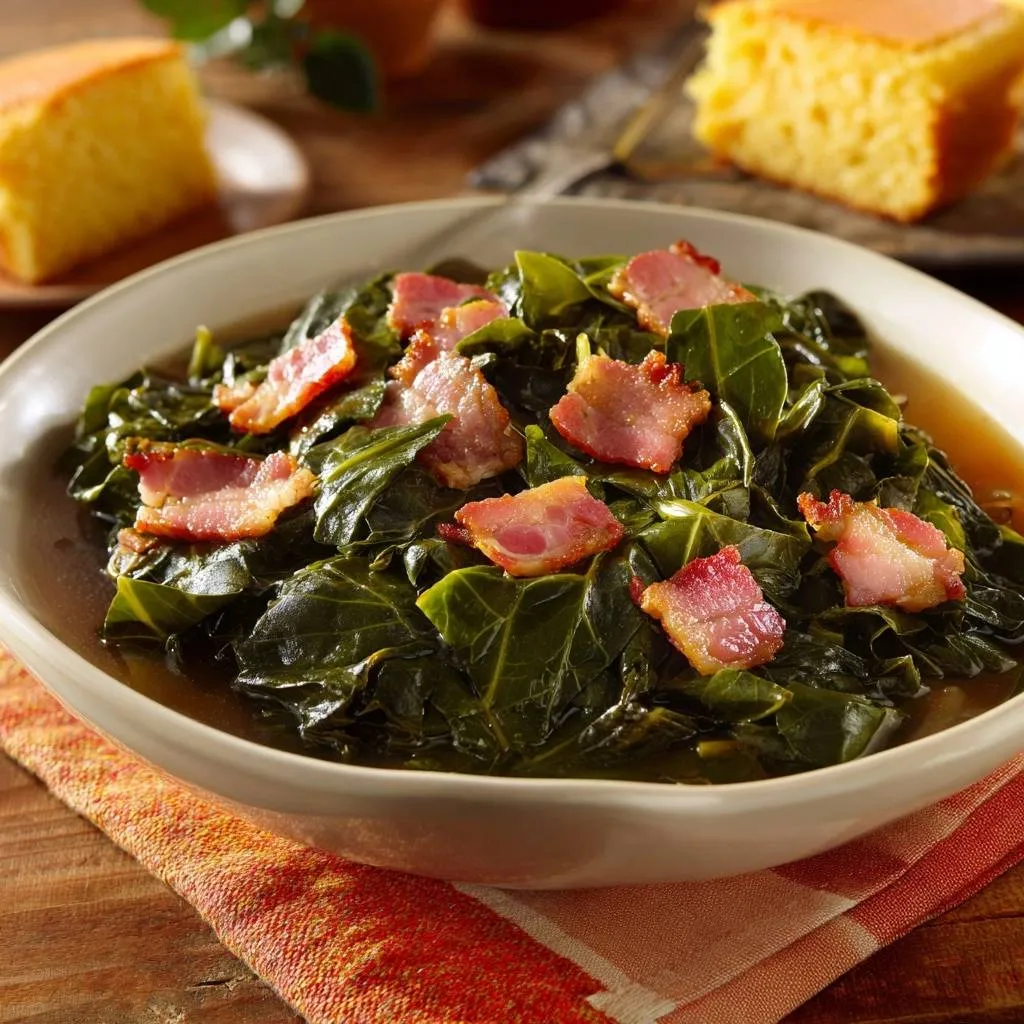
Bacon’s fat renders unmatched savoriness that plant-based swaps just can’t match. Southern farms raised hogs year-round, so it flavored everything from greens to beans. That smoky depth defines the dish.
Key Ingredients for Southern Collard Greens with Bacon
Start with 2 pounds fresh collard greens; they wilt down to about 16 cups chopped. Then grab 8 slices chopped bacon for rendering fat. One large diced onion builds the base, 4 cups low-sodium chicken broth simmers everything tender, 2 tablespoons apple cider vinegar tenderizes with its acidity, plus 1 teaspoon salt, 1/2 teaspoon black pepper, and 1/2 teaspoon crushed red pepper flakes for heat.
Low-sodium broth prevents oversalting since bacon brings plenty. Apple cider vinegar cuts richness and helps break down fibers. Fresh greens beat bagged ones for vibrant color and texture; sub veggie broth if needed.
Collard Greens: Fresh Selection Guide
Pick vibrant, deep green leaves without yellow spots or wilting. A 2-pound bunch yields 16 cups once prepped. Avoid pre-chopped bags; they often hide tough stems.
Bacon and Aromatics Breakdown
Thick-cut bacon crisps up better and renders more fat than thin slices. Onions saute to golden sweetness via Maillard reaction, adding caramel notes. Don’t skip them.
For a similar savory kickoff, check out these crispy skillet potatoes.
Prep Technique: Removing Tough Stems from Collards
Rinse collards under cold water first. Fold each leaf in half lengthwise, then grip the stem and pull sharply to strip the thick rib out. It snaps right off, leaving tender leaf behind.
Stack 4-5 leaves, roll tightly into a cigar shape, and slice into 1-inch ribbons. High cellulose in stems causes chewiness, so remove them fully. Partial stripping leads to stringy bites every time.
Batch Rinsing for Clean Greens
Soak ribbons in cold water for 5 minutes, swish to release sand, then drain. An optional vinegar splash helps. Rinse twice for grit-free results.
Bacon Rendering in Southern Collard Greens
Over medium heat in a Dutch oven, cook chopped bacon 8 minutes until crispy. Fat renders into liquid gold; scoop out bacon but leave 3 tablespoons drippings. Medium heat crisps edges without burning.
For another great way to use crispy bits, check out edamame with crispy bacon.
Those drippings infuse every leaf with smoky flavor. Too high heat scorches them, so watch closely. Pro tip: taste the fat; it should smell rich and bacon-y.
Why Reserve Bacon Until End
Saving bacon keeps it crisp instead of soggy. It also lets pot likker build pure flavor. Stir it back in right before serving.
Building Flavor Base for Collard Greens with Bacon
Add diced onion to hot drippings; saute 5 minutes until soft and golden. That caramelization brings sweet depth. Toss in collard ribbons next, coating them for 2 minutes to wilt and absorb fat.
The greens turn vibrant and floppy fast. This step locks in bacon essence. Skip it, and flavors stay flat.
Layering Spices and Broth
Pour in broth, vinegar, salt, pepper, and flakes. Vinegar’s low pH tenderizes fibers over time. Bring to simmer, then go low.
Low-Slow Simmer: Perfect Tenderness Technique
Cover and cook on low 1 hour 15 minutes to 1 hour 30 minutes, stirring every 20 minutes. Test with a fork; greens should pierce easily but hold shape. Collagen breaks down slowly here, turning tough to silky.
If dry, add 1/4 cup water. Don’t rush with high heat; it mushifies them. Patience rewards with perfect texture.
Pot Likker: The Liquid Gold Bonus
That nutrient-packed broth at the bottom? It’s pot likker, sipped straight in tradition. Full of vitamins from the greens. Spoon it over rice or cornbread.
Dutch Oven Science for Collard Greens with Bacon
Cast iron Dutch ovens retain even heat and moisture, perfect for long simmers. Enameled versions clean easy; seasoned bare ones add subtle depth. Stockpots lose steam too fast, drying things out.
Therefore, invest in one if you love soul food. It distributes heat gently, preventing hot spots. Your greens cook uniformly tender.
Avoiding Mistakes in Southern Collard Greens with Bacon
Top error: skipping full stem removal, leaving chewy strings. High heat turns them mushy fast. Undersalting happens since bacon varies; taste broth midway and adjust.
Overcooking past fork-tender makes slop. Stir regularly and check liquid levels. These fixes keep it spot-on.
Troubleshooting Texture Issues
Stringy greens mean stems lingered; simmer longer next time. Mushy? Shorten cook by 15 minutes. Silky hits when fork slides in smooth.
Flavor Variations on Collard Greens with Bacon
Swap turkey bacon for smokier lean. Add minced garlic or a ham hock for extra depth. Cajun twist: up red flakes and toss in bell peppers.
For vegan, use mushroom “bacon” and veggie broth with liquid smoke. Tweak vinegar-sugar if you want sweeter; start with 1 teaspoon honey. Endless tweaks, same tenderness.
Make-Ahead and Freezing Guide
Make ahead up to 2 days; reheat on stovetop with splash of broth. Freezes well for 3 months in airtight bags. Thaw overnight, retain pot likker.
Pairing Southern Collard Greens with Bacon
Classic with golden cornbread to sop up pot likker, fried chicken, or mac and cheese. Perfect for holiday spreads or BBQ plates. Light reds like sparkling grape juice cut the richness nicely.
Complementary Dishes to Try
To round out your meal, consider these complementary recipes.
- For more slow-cooked greens, try savory braised collard greens, which offer a similar depth of flavor.
- If you’re looking for a hearty meat to pair, explore slow-braised beef short ribs, known for their tender texture.
Southern Collard Greens with Bacon FAQ
Can I Use Frozen Collards?
Yes, thaw and drain well first to remove excess water. Chop if needed, then reduce simmer to 45-60 minutes since they’re partially broken down. Fresh still edges out for texture.
How Spicy Are These Greens?
The 1/2 teaspoon red flakes gives mild heat that builds. Cut to 1/4 for kids, or double for fire. Taste broth after 30 minutes and adjust.
Vegetarian Version Possible?
Swap bacon for smoked mushrooms or tempeh bacon, use veggie broth. Add liquid smoke for that rendered-fat vibe. Same simmer works perfectly.
Why Vinegar in Collard Greens with Bacon?
Apple cider vinegar’s acidity tenderizes tough fibers and brightens flavors, balancing bacon’s richness. It mimics traditional pot methods without overpowering. Lemon juice subs in a pinch.
Storage for Leftover Greens?
Store in airtight container with pot likker for up to 5 days in fridge; it keeps them moist. Freezes 3 months, but don’t drain liquid or they dry out. Reheat gently on stove with extra broth.
Collard Greens
Course: Side DishCuisine: AmericanDifficulty: medium8
servings20
minutes1
hour180
kcal120
MinutesTired of chewing through stringy stems and tough leaves? This recipe nails perfectly tender collards with a foolproof prep step and low-slow bacon braise that breaks down every fiber without turning them mushy. Your new go-to side.
Ingredients
2 pounds fresh collard greens
8 slices bacon, chopped
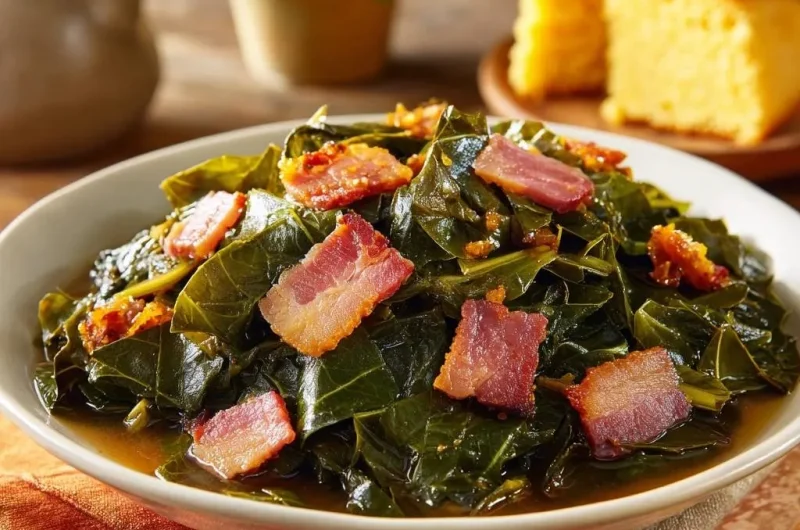
1 large onion, diced (those caramelized bits you see)
4 cups low-sodium chicken broth
2 tablespoons apple cider vinegar
1 teaspoon salt
1/2 teaspoon black pepper
1/2 teaspoon crushed red pepper flakes
Directions
- Start with the key to no tough collards: Rinse greens thoroughly under cold water. Working in batches, strip out the thick center ribs and stems completely (theyre the chewy culprits, fold leaf in half and pull or cut along the spine). Stack leaves, roll tightly, and slice into 1-inch ribbons. This prep ensures silky texture from the start.
- In a large Dutch oven or pot over medium heat, cook chopped bacon until crispy and fat renders, about 8 minutes. Remove bacon with a slotted spoon, leaving 3 tablespoons drippings in pot.
- Add diced onion to drippings, saute until golden and soft, about 5 minutes (creates those flavorful orange bits).
- Stir in collard ribbons, tossing to coat in fat for 2 minutes. This wilts them fast and infuses bacon flavor.
- Pour in chicken broth, vinegar, salt, pepper, and red pepper flakes. Bring to a simmer, then reduce heat to low, cover, and cook 1 hour 15 minutes to 1 hour 30 minutes, stirring occasionally. Greens are done when fork-tender but still hold shape (test a piece, add 1/4 cup water if needed). Stir in reserved bacon. Serve hot with pot likker. Pairs great with that golden cornbread slice.
Notes
- Remove thick center ribs and stems completely for silky texture. Serve with pot likker and cornbread.