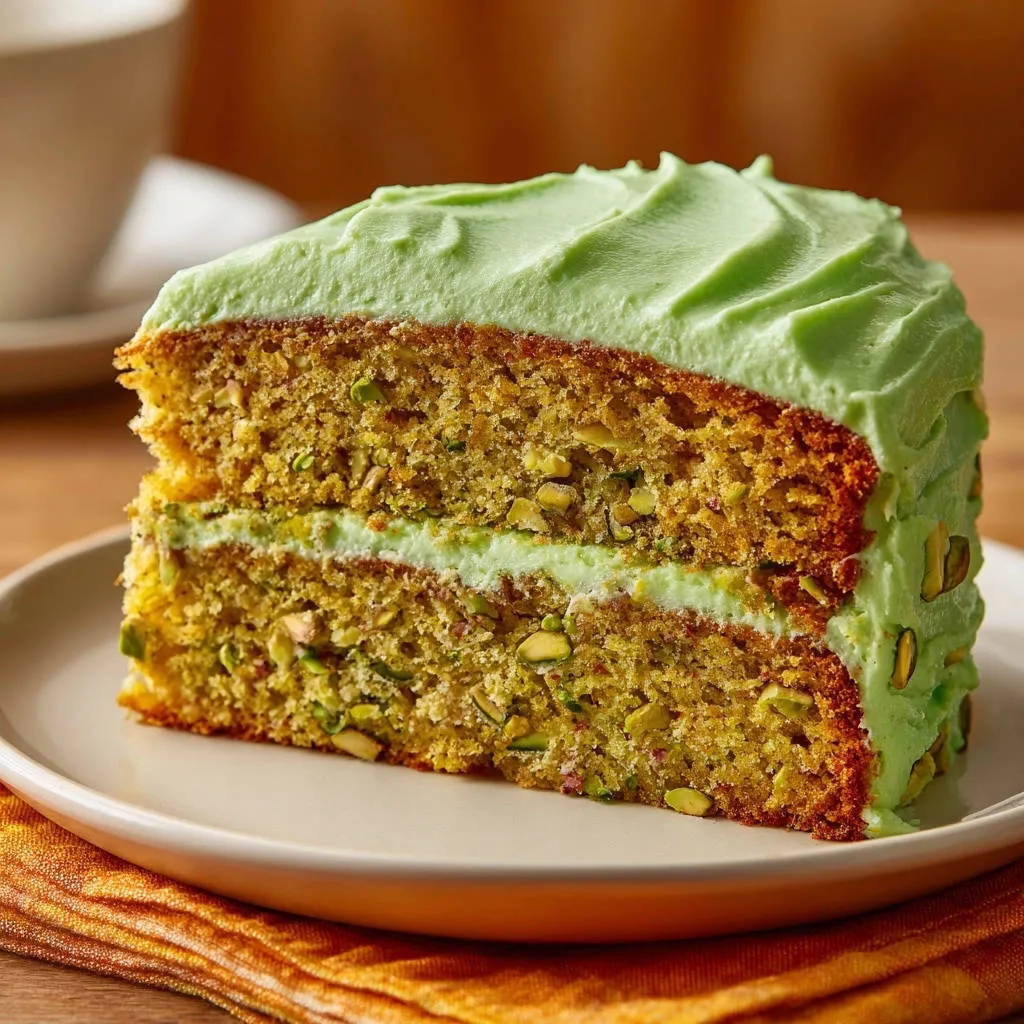
So often, homemade pistachio cakes are disappointingly dry, quickly losing that luxurious texture that defines a great dessert.
After years of testing, I developed a simple “moisture lock” mixing technique that guarantees a tender, melt-in-your-mouth crumb every time.
This Layered Pistachio Cake recipe delivers intense pistachio flavor paired with a light, tangy cream cheese frosting you won’t forget.
Solving the Dry Cake Dilemma: Our Moisture Lock Technique
This recipe specifically addresses the common issue of dry cake by utilizing a careful balance of acidic liquids, fats, and precise mixing timing.
This proprietary method prevents the toughness associated with typical cake batters, ensuring an ultra-moist crumb that lasts for days.
The Acidic Secret: Buttermilk’s Role in Tenderizing
Buttermilk, an acidic dairy product, reacts with the baking soda to create lift, resulting in a tender, open structure.
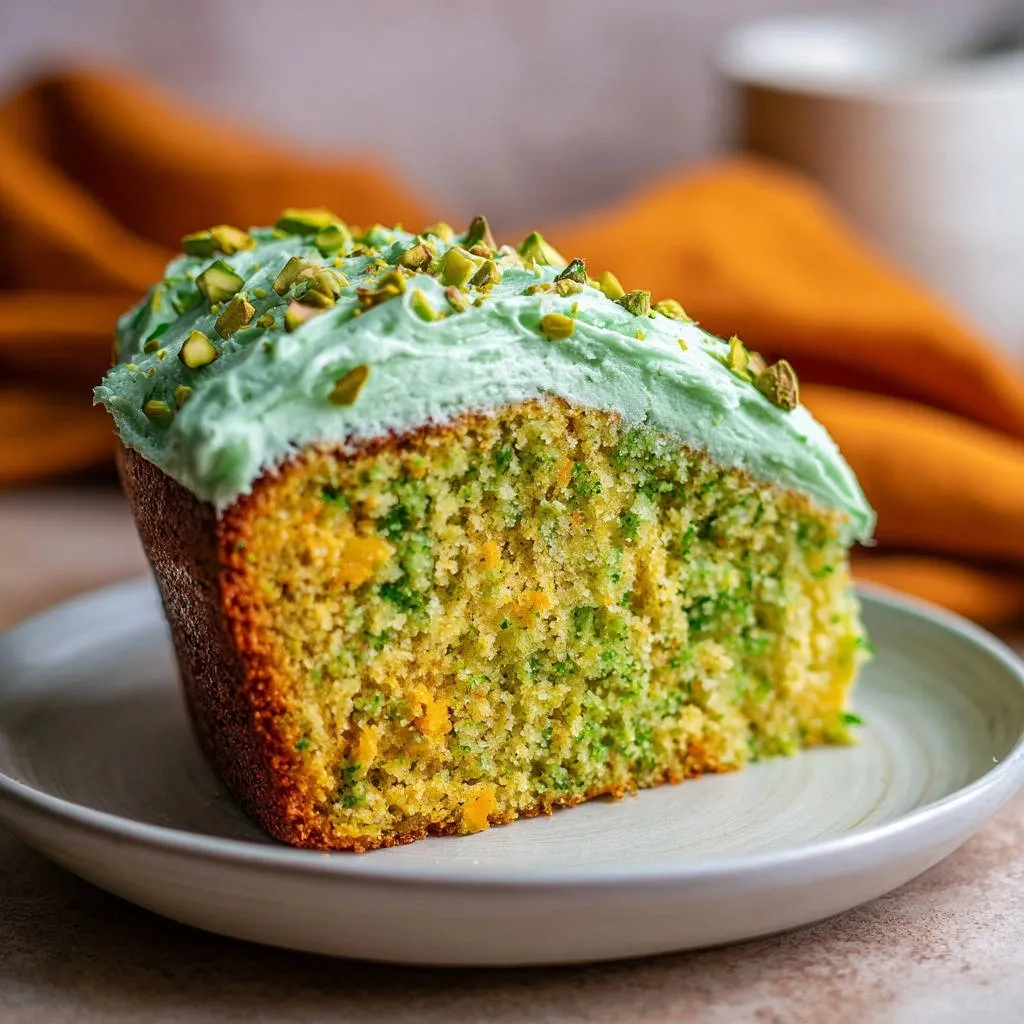
The acid also tenderizes the flour proteins, effectively slowing down gluten development compared to using standard milk.
This unique chemical reaction is key to ensuring the cake remains incredibly soft and light.
Why Fat Matters: Choosing the Right Cooking Oil
We use a neutral cooking oil (such as canola or vegetable) instead of solid fats like butter for the cake layers.
Oil remains liquid at room temperature, physically coating the flour molecules and preventing the cake from drying out over time.
This choice significantly extends the shelf life and tenderness of the finished product over several days.
The Critical Lesson: The Dangers of Overmixing
Overmixing is the single biggest culprit behind tough cake; it activates and develops gluten strands, leading to a dense structure.
When combining wet and dry ingredients, mix only until the flour streaks have just disappeared-usually less than 30 seconds on low speed.
Stop the mixer immediately and finish folding the batter by hand if necessary, preserving that delicate crumb structure.
For those who appreciate a well-developed crumb, consider refining your techniques with red velvet cheesecake cookies for your next project.
Flavor Architecture: Essential Components of the Cake Layers
Building the signature pistachio flavor requires careful consideration of texture and depth.
Milling the Nuts: Achieving Perfect Pistachio Texture
The recipe calls for two types of pistachio preparation to build complex flavor and texture.
Finely ground pistachios are incorporated directly into the dry ingredients to infuse the entire crumb with deep flavor.
Coarsely chopped pistachios are folded in at the end, providing pockets of satisfying crunch and textural contrast.
Extracts vs. Real Flavor: Vanilla and Almond Synergy
Pure vanilla extract rounds out the overall flavor profile, adding a classic warmth that complements the nuttiness.
A small addition of almond extract, while optional, significantly enhances the “nutty” perception without requiring extra pistachio paste.
For the best, clearest flavor, always opt for pure extracts.
Understanding Flour and Leavening Agents
The high ratio of sugar and liquid in this recipe demands a robust leavening agent like baking soda, especially when paired with the acidic buttermilk.
This balance guarantees a fluffy rise despite the richness of the oil and sugar content.
Always ensure you are using fresh baking soda for maximum potency and lift.
Setup for Success: Essential Baking Gear and Prep
Success begins long before the batter hits the oven. Proper preparation ensures even baking and a flawless finish.
The Right Pans: Why 8-Inch Rounds Work Best
Two 8-inch round pans are specified because they allow the batter to spread slightly thinner, ensuring even heat distribution during baking.
Layers that are too thick risk having a dense center or dry outer edges.
Parchment Paper and Greasing Techniques
To guarantee easy release, first grease the pans thoroughly with baking spray or butter, then dust them lightly with flour.
Finally, cut a parchment circle to fit the bottom of the pan-this triple threat preparation ensures no sticking whatsoever.
Ensuring Ingredients Are Room Temperature
Room temperature buttermilk and eggs are essential for creating a smooth, stable emulsion with the cooking oil.
Cold ingredients will cause the oil to seize or clump, resulting in an inconsistent batter that bakes unevenly.
Pull these key ingredients out at least 30 minutes before starting the recipe for proper integration.
Detailed Guide: Baking and Assembling Your Layered Pistachio Cake
Follow these steps exactly to ensure the moisture lock technique performs perfectly.
-
Step 1: Prep Pans and Whisk Dry Ingredients
Preheat the oven to 350 degrees F and prepare your 8-inch pans according to the detailed greasing and flouring protocol above.
Combine the flour, sugar, baking soda, salt, and finely ground pistachios in a large mixing bowl, whisking until the mixture is fully homogenous.
-
Step 2: Execute the Moisture Lock Wet Mix
In a separate medium bowl, thoroughly whisk the room temperature buttermilk, cooking oil, eggs, vanilla extract, and almond extract.
This specific mix of liquid fats and acid is the engine behind the cake’s exceptional moisture.
-
Step 3: Combine Wet and Dry Using the Low-Speed Rule
Slowly stream the wet ingredients into the dry mixture on the lowest speed possible.
Stop mixing the absolute second all flour streaks disappear; this is the critical moment where the cake is made or broken-do not overmix!
Gently fold in the coarsely chopped pistachios and optional green food coloring for better visual appeal.
-
Step 4: Bake and Test
Divide the batter evenly between the two prepared pans, ensuring the weight is equalized if possible.
Bake for 30-35 minutes, looking for a clean wooden toothpick test and layers whose edges are just beginning to pull away from the pan.
-
Step 5: Cooling Protocol
Allow the cakes to cool in the pans for 10 minutes on a wire rack to help the delicate structure set up after the oven heat.
Invert the cakes onto the wire rack and allow them to cool completely before frosting; this prevents steaming, which can cause gummy edges, and ensures the cream cheese frosting does not melt.
For a similar rich texture, explore creamy pumpkin swirl cheesecake.
Crafting the Signature Cream Cheese Pistachio Frosting
The tangy, rich frosting perfectly balances the sweet, nutty Layered Pistachio Cake layers.
Perfecting the Base: Creaming Butter and Cream Cheese
Both the unsalted butter and cream cheese must be perfectly softened to room temperature-firm but yielding easily to pressure.
Beat them together on medium-high speed for 3 to 4 minutes until the mixture is truly lightened in color and volume, incorporating maximum air.
Sifting Sugar: Eliminating Grittiness
Powdered sugar often contains hard, microscopic lumps, which will create a noticeable grainy texture if not removed.
Sifting the required four cups of powdered sugar is non-negotiable for achieving the signature silky smooth finish expected of this dessert.
Achieving the Perfect Hue and Garnish
Pistachios lose some of their natural vibrant color during the high heat of baking, so a small amount of green gel food coloring provides a visual boost to the frosting.
Add the coloring drop by drop at the end of frosting preparation until you reach a light, appealing pistachio shade.
For the final touch, strategically press the remaining coarsely chopped pistachios onto the sides or edge of the top layer for a professional, textural finish.
-
Step 6: Prepare the Frosting
Beat the softened butter and cream cheese together until light and creamy, scraping the bowl frequently to ensure even mixing.
Gradually add the sifted powdered sugar, salt, and extracts, beating until the frosting is smooth and wonderfully fluffy.
-
Step 7: Assemble the Layers
Place the first cake layer on your serving plate, spread about 1 cup of frosting evenly, and stack the second layer on top.
Use the remaining frosting to cover the top and sides of the cake completely, smoothing the edges with an offset spatula for a clean look.
What to Pair with Your Pistachio Cake
Round out your dessert spread with these complementary recipes, perfect for adding more texture and flavor.
- For a savory counterpoint to the sweet pistachio cake, consider these Cheddar Parsley Biscuits, offering a delightful contrast with their cheesy notes.
- Start your day with these Cinnamon Sugar Cream Cheese French Toast Rolls for another sweet treat that complements the nutty sweetness of the cake.
Common Questions and Chef’s Tips for a Perfect Crumb
These troubleshooting notes and advanced tips ensure your bake is flawless, demonstrating true baking expertise.
Maximizing Pistachio Flavor Without Extract
If you prefer to skip the almond and pistachio extracts for a more natural taste, lightly toast your finely ground pistachios in a dry pan for 5 minutes before adding them to the dry ingredients.
This low-heat toasting activates the nuts’ natural oils and deepens the inherent nutty flavor significantly without adding artificial compounds.
Troubleshooting: Why Did My Layers Bake Unevenly?
Uneven layers are typically caused by oven hot spots or inconsistent pan filling.
Always use a kitchen scale to ensure the batter weight is identical in both pans before baking, and rotate the pans halfway through the baking time to compensate for temperature variations in the oven.
Avoiding a Tough or Dense Layered Pistachio Cake
If the cake seems dense despite careful mixing, check the freshness of your baking soda, as inactive leavening is crucial in oil-based cakes.
The overwhelming majority of toughness comes from aggressive mixing; remember the critical rule: stop immediately when the flour disappears to prevent strong gluten development.
Scaling the Recipe for Three or Four Layers
This recipe scales beautifully; simply multiply all ingredients by 1.5 to fill three 8-inch pans, creating a taller dessert.
Alternatively, use the original recipe amount and divide it among three 6-inch pans for a much taller, narrow, and elegant presentation perfect for special events.
Serving, Storing, and Customizing Your Bake
Ensure your Layered Pistachio Cake stays magnificent long after it leaves the oven.
How Long Does Layered Pistachio Cake Stay Fresh?
Because this dessert relies on cream cheese frosting, it must be stored tightly covered in the refrigerator.
Thanks to the moisture-locking oil technique, the cake remains wonderfully fresh and tender for up to 5 days, though I recommend serving it within 3 days for peak flavor.
Make-Ahead Strategies for Easy Entertaining
Cake layers can be baked, wrapped tightly in plastic wrap, and frozen for up to two months without loss of quality.
Thaw the layers overnight in the refrigerator before frosting, and note that the assembled and frosted Layered Pistachio Cake is best prepared no more than 24 hours before serving.
Flavor Substitutions and Dietary Adjustments
If you don’t have buttermilk, combine 1 cup of regular milk with 1 tablespoon of white vinegar or lemon juice, let it sit for 5 minutes, and then use it as a perfect homemade substitute.
For a gluten-free Layered Pistachio Cake, use a high-quality 1:1 gluten-free baking blend, but expect a slight decrease in tenderness and potentially minor adjustments in baking time.
Ready to Impress? Share Your Pistachio Masterpiece!
Achieving this level of moisture and rich pistachio flavor is incredibly satisfying, and with our moisture lock technique, dry, disappointing results are a thing of the past.
This Layered Pistachio Cake recipe proves that home baking can deliver professional-level, ultra-moist results every time.
Now that you have the secrets to the ultimate pistachio bake, I encourage you to try this recipe this week. Please leave a rating and share your results below-I love seeing your beautiful bakes!
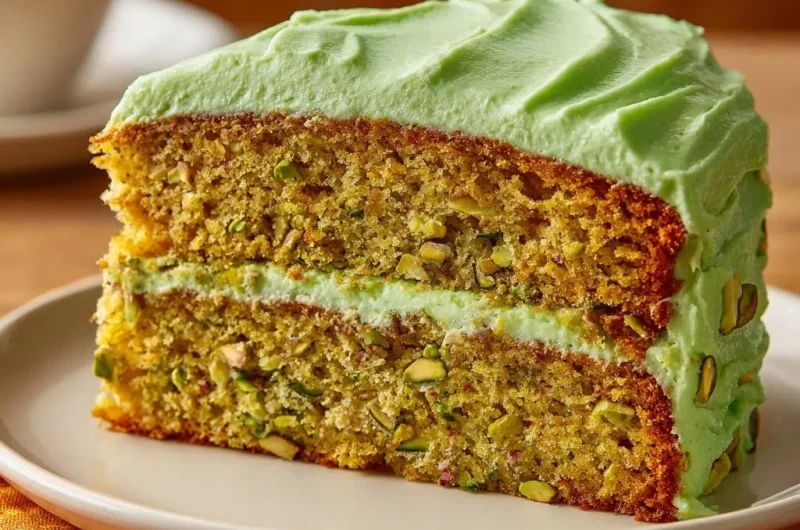
Pistachio Cake
Course: DessertCuisine: AmericanDifficulty: medium10
servings30
minutes35
minutes650
kcal60
minutesThis recipe solves the dry cake problem with a simple moisture-locking mixing technique that ensures an ultra-tender crumb every time. Rich, nutty, and layered with tangy cream cheese frosting, this cake stays perfectly soft for days.
Ingredients
For the Cake:
2 and 1/2 cups all-purpose flour
2 cups granulated sugar
1 teaspoon baking soda
1/2 teaspoon salt
1 cup neutral cooking oil (like canola or vegetable)
1 cup buttermilk, room temperature
2 large eggs, room temperature
1 teaspoon pure vanilla extract
1 teaspoon almond extract (optional)
1 and 1/2 cups shelled pistachios, finely ground (plus 1/2 cup coarsely chopped for texture)
1 tablespoon green food coloring (optional, for color boost)
For the Cream Cheese Frosting:
1 cup unsalted butter, softened
8 ounces cream cheese, softened
4 cups powdered sugar, sifted
1 teaspoon vanilla extract
1/2 teaspoon pistachio extract (optional)
1/4 teaspoon salt
Green food coloring (optional)
1/4 cup chopped pistachios, for garnish
Directions
- Prepare the Pans and Dry Ingredients: Preheat the oven to 350 degrees F. Grease and flour two 8-inch round cake pans. Line the bottoms with parchment paper. In a large mixing bowl, whisk together the flour, granulated sugar, baking soda, and salt. Add the finely ground pistachios to this mixture and whisk well until everything is fully combined.
- Execute the Moisture Lock Technique: In a separate medium bowl, whisk together the room temperature buttermilk, cooking oil, eggs, vanilla extract, and almond extract (if using). This combination of liquid fats and an acidic base is key to preventing dryness. Slowly stream the wet ingredients into the dry mixture on low speed, mixing just until the batter is smooth and no streaks of flour remain. DO NOT OVERMIX. Overmixing develops gluten and is the primary reason cakes become tough or dry. Gently fold in the coarsely chopped pistachios and the green food coloring (if using).
- Bake the Cake Layers: Divide the batter evenly between the two prepared pans. Bake for 30 to 35 minutes, or until a wooden toothpick inserted into the center comes out clean.
- Cool Completely: Let the cakes cool in the pans for 10 minutes before inverting them onto a wire rack to cool completely. Cooling on the rack prevents steaming, which can make the edges gummy.
- Prepare the Frosting: Beat the softened butter and cream cheese together in a large bowl until light and creamy, scraping down the sides often. Gradually add the sifted powdered sugar, salt, and extracts, beating until the frosting is smooth and fluffy. Add green food coloring drop by drop until the desired light green shade is achieved.
- Assemble the Cake: Place one cake layer on your serving plate. Spread about 1 cup of frosting evenly over the top for the filling. Place the second cake layer on top. Use the remaining frosting to cover the top and sides of the cake. Gently press the remaining chopped pistachios onto the sides of the cake for garnish. Slice and enjoy the ultra-moist crumb!
Notes
- Ensure buttermilk, eggs, and butter are at room temperature. Do not overmix the batter to maintain tenderness and moisture.