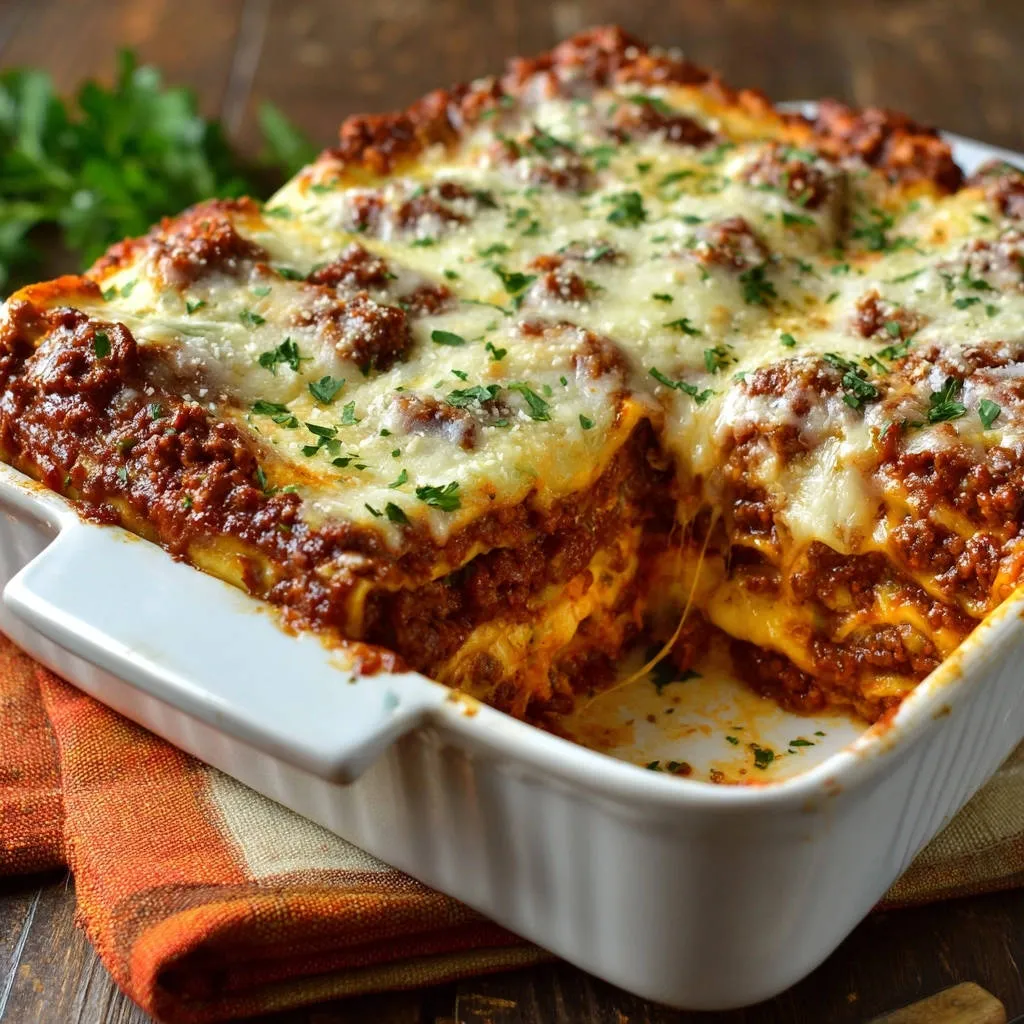
I know the frustration of spending hours layering a beautiful lasagna only to cut into a soupy, cheesy mess that collapses everywhere. After years of refinement, I finally cracked the simple trick that ensures this Rich Layered Beef Lasagna holds its shape perfectly every time.
The secret lies in proper sauce preparation and a crucial, non-negotiable resting period after baking. This method guarantees those stunning, firm layers you crave, delivering an intensely savory and structurally sound dish.
Beyond Basic: Why This Rich Layered Beef Lasagna is Guaranteed to Impress
The Solution to Soupy Slices: Structural Integrity
The goal is a firm, clean slice. We achieve this by focusing on two key structural components: sauce reduction and proper post-baking rest.
For a truly solid foundation, explore how to engineer the perfect structural slice in my meaty lasagna.
A deeply reduced sauce minimizes excess free moisture, while incorporating an egg into the ricotta filling acts as a reliable binder, ensuring the layers set during baking.
Deep, Complex Flavor Profile
The “Rich” component comes from the careful blend of salty Parmesan, stretchy mozzarella, and creamy whole milk ricotta.
Pairing these cheeses with a slow-simmered, 30-minute reduced meat sauce creates an intensely savory and satisfying depth of flavor that defines classic comfort food.
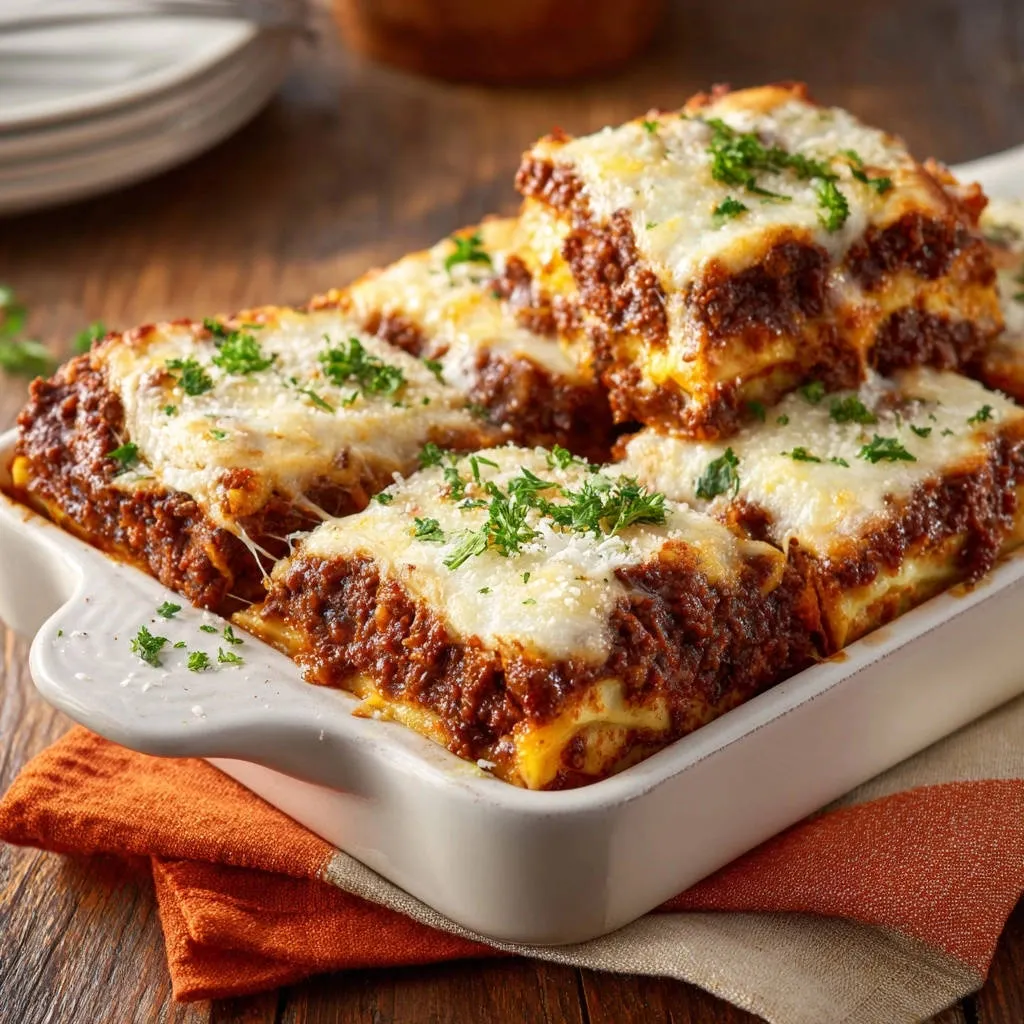
The Building Blocks: Essential Ingredients for Deep Flavor
The Heart of the Dish: Meat Sauce Components
Using lean ground beef is preferred to minimize grease, but draining fat thoroughly is essential regardless.
The combination of crushed tomatoes and thicker tomato sauce creates a robust base that clings to the noodles and minimizes excess moisture.
Achieving Creamy Richness: The Cheese Filling
Whole milk ricotta offers superior texture and richness compared to part-skim, preventing a grainy filling.
The large egg acts as a crucial binder, ensuring the ricotta layer sets firm during baking and resting.
Noodle Selection and Preparation
Cooking the lasagna noodles al dente (slightly undercooked) ensures they finish perfectly in the oven without turning mushy.
Thoroughly draining and cooling the noodles prevents extra water from leaching into the final layers.
For more ideas on achieving those non-soggy layers, check out this cheesy beef spinach lasagna.
Essential Tools for Your Lasagna Adventure
-
9×13 Inch Baking Dish:
This standard size is critical for achieving the correct layer count and overall baking time.
-
Large Skillet or Dutch Oven:
Needed for browning the beef and, crucially, allowing the sauce enough surface area to simmer down and thicken properly.
-
Heavy-Duty Aluminum Foil:
Required for covering the lasagna during the initial bake to lock in moisture, and for tenting during the critical resting period.
From Stove to Pan: Crafting the Layers of Perfection
-
Step 1: Deepening the Meat Sauce Base
Ensure the ground beef is browned and excess fat is fully drained. Sauteing the onion until tender adds sweetness before the garlic.
-
Step 2: The Critical Sauce Reduction
After adding the tomatoes and seasonings, the sauce MUST simmer on low for a full 30 minutes, stirring occasionally. This extended simmer significantly reduces moisture content, which is the first step in preventing a soupy result.
-
Step 3: Preparing the Smooth Ricotta Filling
Combine the ricotta, egg, and fresh parsley until completely smooth. The egg should be thoroughly incorporated to act as the binding agent.
-
Step 4: Initial Assembly and Base Layer
Spread a thin layer of sauce across the bottom of the greased dish-this prevents the first layer of noodles from sticking and burning.
For a quick weeknight option with similar texture, try this deep dish skillet lasagna.
-
Step 5: Building the Three Core Layers
Follow the sequence precisely: noodles, half of the ricotta, one-third of the mozzarella, and half of the remaining meat sauce. Repeating this sequence ensures consistent distribution and structural stability.
-
Step 6: The Final Top Layer
Finish with a final layer of noodles, the last third of mozzarella, and the Parmesan cheese. The Parmesan adds a sharper, saltier finish that browns beautifully.
-
Step 7: The Bake Cycle
Bake covered for 30 minutes to cook through evenly, then uncovered for 15-20 minutes until the top is golden and bubbling vigorously. The bubbling indicates the layers are fully heated and the cheeses are fully melted.
The Architect’s Secret: Achieving Perfectly Firm, Clean Slices
Why the Mandatory 30-45 Minute Rest is Non-Negotiable
When the Rich Layered Beef Lasagna comes out of the oven, the sauces and cheeses are liquid molten lava. Cutting into it immediately releases that moisture and collapses the structural integrity built up during baking.
The 30 to 45 minute resting period allows the temperature to drop gradually. As the cheese, ricotta, and sauce cool, their fat content and binding agents solidify, effectively locking the layers together like culinary cement.
Optimal Serving Temperature After Resting
While 45 minutes may seem long, the internal heat is so significant that the lasagna will still be perfectly hot, but structurally stable, when cut. This balance ensures a perfect serving experience.
Chef’s Secrets and Make-Ahead Magic
Use Freshly Chopped Herbs: The use of fresh parsley, especially as a garnish, significantly brightens the flavor and cuts through the richness of the beef and cheese. Do not substitute with dried parsley for the filling.
Pre-Shred Your Mozzarella: While block cheese tastes better, for this specific layered dish, pre-shredded mozzarella offers a better, more even melt that helps lock the layers in place.
Make-Ahead Prep: The meat sauce can be made 2-3 days in advance and refrigerated. This breaks up the preparation time and allows the flavors of the sauce to deepen further.
Freezing and Reheating Your Rich Layered Beef Lasagna
Lasagna freezes exceptionally well, either baked or unbaked. If freezing unbaked, wrap tightly in plastic wrap and foil. Bake from frozen (adding an extra 30 minutes to the covered cook time).
To reheat leftovers, slice individual portions and microwave, or place slices in a foil-covered dish and reheat in a 350°F (175°C) oven until heated through.
Troubleshooting and Frequently Asked Lasagna Questions
“My Lasagna Tastes Bland or Lacks Depth”
The solution lies in the sauce reduction time (Step 2). Ensure you are simmering for the full 30 minutes, which concentrates the tomato flavor. Also, taste and adjust the salt and pepper before layering.
“The Sides Look Dry While the Middle is Still Wet”
This often occurs if the baking dish isn’t evenly preheated or the sauce is spread too thinly on the sides. Make sure to spread the sauce consistently across the entire bottom and avoid using convection settings initially.
“Can I Use No-Boil Noodles in This Recipe?”
Yes, no-boil noodles can be substituted, but only if you increase the moisture content slightly (use a slightly less reduced sauce or add a splash of water to the meat sauce layers). They rely heavily on moisture absorption from the sauce to soften.
“How Do I Know When It’s Done?”
The tell-tale signs are vigorous bubbling around the edges and a beautifully browned, melted top. If the cheese is browning too quickly, tent it loosely with foil for the remainder of the baking time.
Ready to Impress? Serving and Pairing Suggestions
Serve this Rich Layered Beef Lasagna with simple, fresh counterpoints to balance the richness.
A simple side salad with a bright vinaigrette or some garlic bread are classic pairings that complete the perfect family meal.
What to Try Next
To round out your Italian-inspired meal, consider these flavorful dishes.
- For a starter that builds on rich tomato flavors, try these skillet meatballs in rich tomato sauce, they share a similar hearty profile.
- If you’re in the mood for another Italian classic with a focus on texture, consider this skillet chicken parmesan for its satisfying crunch.
We invite you to try this fail-safe method. Share your results and your favorite drink pairing in the comments below!
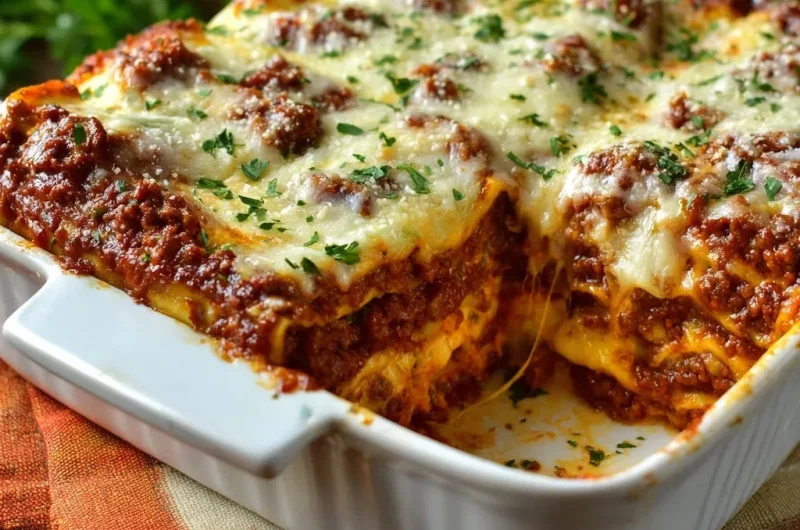
Beef Lasagna
Course: Main CourseCuisine: Italian-AmericanDifficulty: medium10
servings25
minutes1
hour450
kcal120
minutesSay goodbye to sloppy lasagna! This classic Italian-American beef and ricotta dish features perfectly layered noodles and a thick, savory meat sauce. Follow the key resting step after baking to ensure stunning, clean slices every time.
Ingredients
1 pound lean ground beef
1 small yellow onion, diced
3 cloves garlic, minced
1 (28 ounce) can crushed tomatoes
1 (15 ounce) can tomato sauce
1 teaspoon dried basil
1 teaspoon dried oregano
1/2 teaspoon salt
1/4 teaspoon black pepper
1 box (9 ounces) lasagna noodles, cooked al dente and drained thoroughly
3 cups whole milk ricotta cheese
1/4 cup fresh parsley, chopped, divided
1 large egg
4 cups shredded mozzarella cheese, divided
1/2 cup grated Parmesan cheese
Directions
- Prepare the Meat Sauce. Brown the ground beef in a large skillet over medium heat, draining off any excess fat. Add the diced onion and cook until softened, about 5 minutes. Stir in the minced garlic and cook for 1 minute until fragrant. Cook until no pink remains and it reaches 160°F (71°C).
- Add the crushed tomatoes, tomato sauce, basil, oregano, salt, and pepper. Bring the mixture to a simmer, then reduce heat to low and cook for at least 30 minutes, stirring occasionally, until the sauce has thickened significantly. A thick sauce is essential for structural integrity.
- Prepare the Cheese Filling. In a medium bowl, combine the ricotta cheese, 2 tablespoons of the chopped parsley, the egg, and a pinch of salt. Mix well until completely smooth.
- Preheat the oven to 375 degrees F. Lightly grease a 9×13 inch baking dish.
- Assemble the Lasagna. Spread a thin layer of the meat sauce across the bottom of the prepared dish. Lay down a single layer of cooked lasagna noodles, overlapping slightly if necessary.
- Spread half of the ricotta mixture over the noodles. Sprinkle with one-third of the mozzarella cheese (about 1 1/3 cups). Top with half of the remaining meat sauce.
- Add a second layer of noodles. Spread the remaining ricotta mixture over the noodles. Sprinkle with another one-third of the mozzarella cheese. Top with the remaining meat sauce.
- Add the final layer of noodles. Sprinkle the last one-third of the mozzarella cheese and the grated Parmesan cheese over the top.
- Bake the Lasagna. Cover the dish tightly with aluminum foil and bake for 30 minutes. Remove the foil and continue baking for another 15 to 20 minutes, until the cheese is bubbling and lightly browned.
- Pain Point Solution: This is the critical step to achieving clean slices. Once the lasagna is removed from the oven, DO NOT CUT IT YET. Loosely tent the lasagna with foil and let it rest on the counter for a minimum of 30 to 45 minutes. This cooling time allows the molten cheese layers and the hot sauce to settle, firm up, and solidify, locking the layers together so they do not collapse when sliced.
- Garnish and Serve. Once fully rested, cut into squares. Sprinkle with the remaining fresh parsley and serve immediately.
Notes
- The critical step for clean slices is resting: allow the lasagna to sit, loosely tented with foil, for 30-45 minutes after baking.