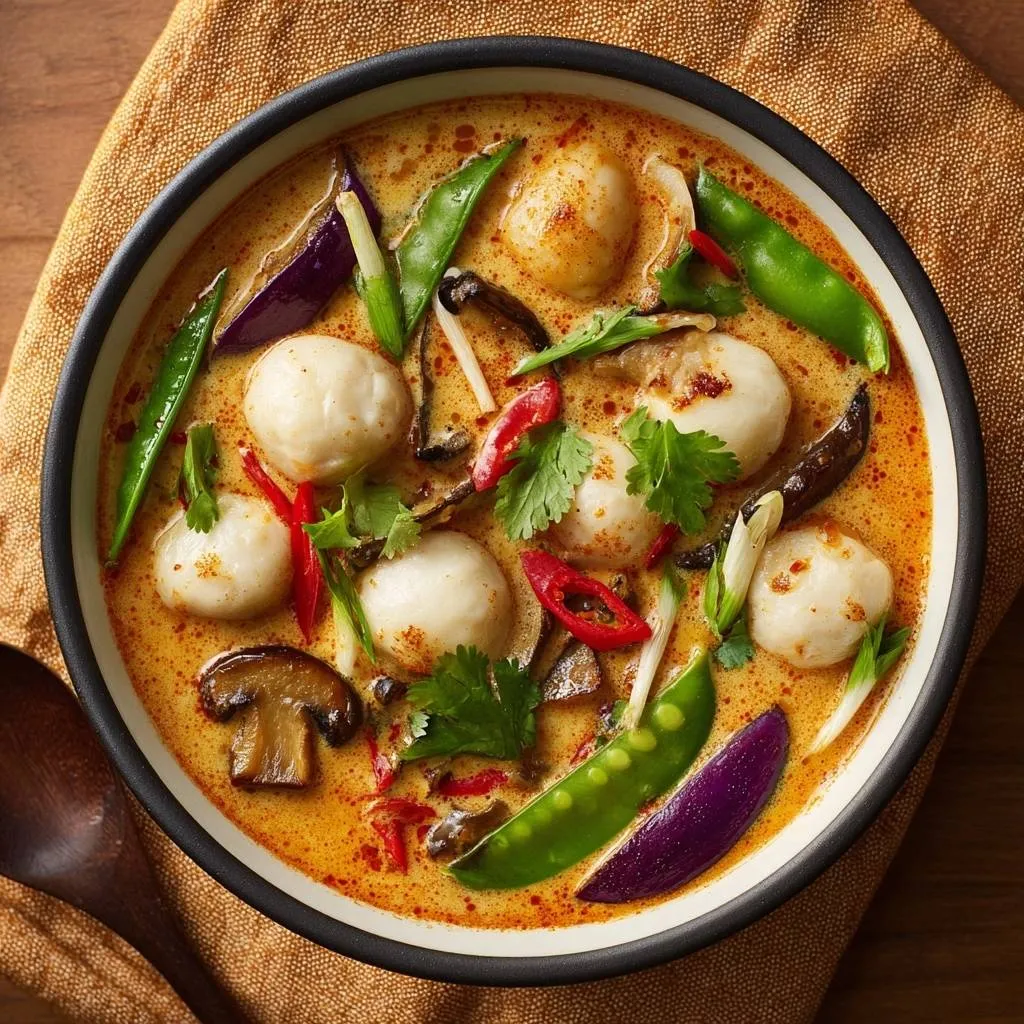
Ever end up with a watery Thai yellow curry that drowns your rice? This Thai yellow curry with fish balls fixes that frustration fast. You fry the curry paste first to unlock its oils, then whisk in coconut milk slowly for a sauce that clings thickly to every bouncy fish ball and crisp veggie. Dinner’s ready in under 30 minutes, way better than takeout.
Why does this method work so well? Most home cooks dump everything in at once, leading to separation and soup. However, frying builds a flavor-packed base that emulsifies perfectly with full-fat coconut milk. In addition, the low simmer reduces it to velvet without breaking.
Here’s the pro tip that seals it: use just 1/2 cup coconut milk at first and whisk vigorously for two full minutes. That creates the emulsion foundation. You’ll see the paste dissolve smoothly, and the sauce thickens right away, guaranteeing no watery mess.
Why Thai Yellow Curry with Fish Balls Stands Out
Thai yellow curry with fish balls delivers creamy richness from its fried paste base, paired with bouncy fish balls and vibrant veggies like eggplant and snow peas. Unlike thin restaurant versions loaded with broth, this stays thick and coats everything beautifully. The fish balls add that perfect chewy contrast.
In Thai cuisine, yellow curry draws from Indian spices adapted with local turmeric and lemongrass. Therefore, it shines in street food stalls where thick sauce is key. You get authentic flavor at home, with control over freshness and heat.
Plus, the gradual coconut milk addition prevents the common split. Snow peas keep their snap, mushrooms boost umami, and chilies bring just-right fire. This dish vanishes fast at gatherings, proving its crowd-pleasing power.
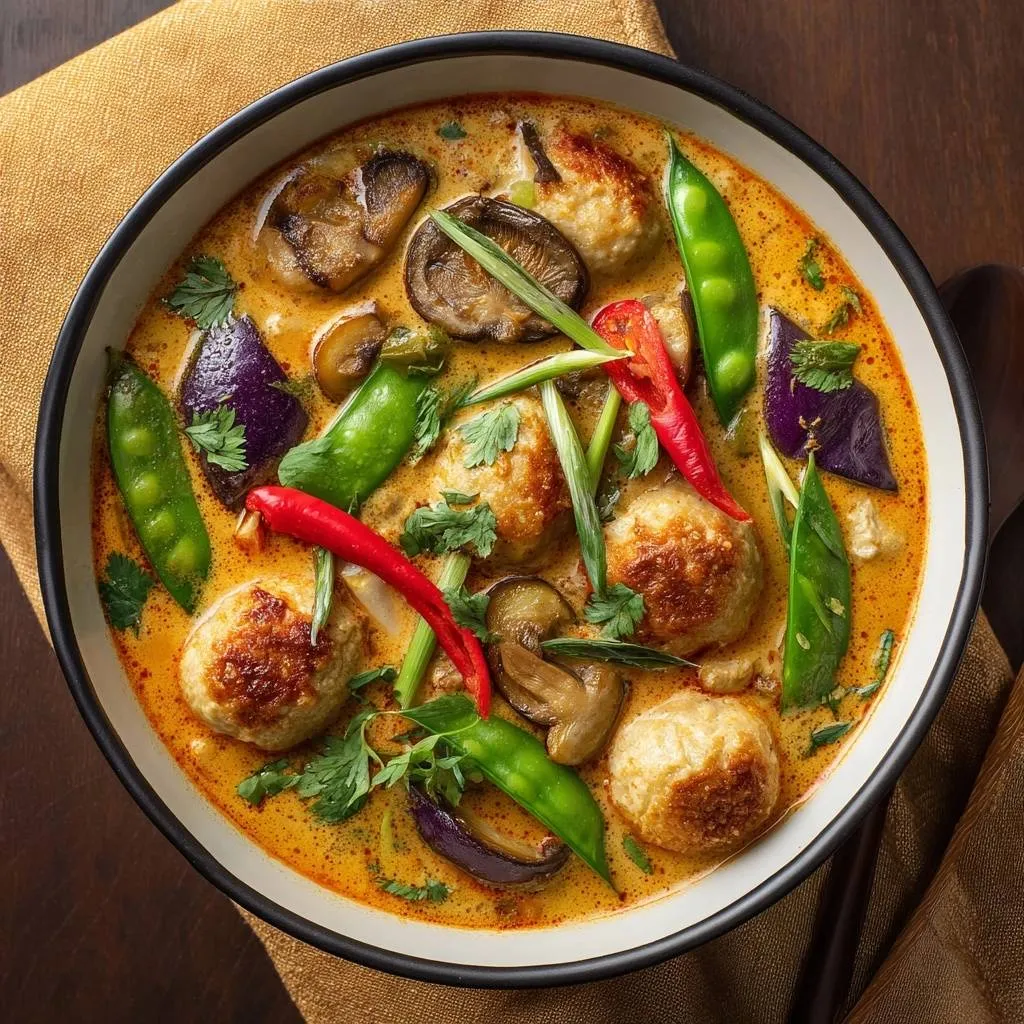
Signature Thick Sauce Secret
The magic happens when you fry yellow curry paste until oils separate. That releases aromatic compounds for deep flavor. Then, gradual coconut milk whisking binds it all into a glossy emulsion.
Compare that to watery failures from skipping the fry. Your sauce reduces to coat fish balls perfectly. It’s foolproof science in action.
Fish Balls: Texture and Freshness Tips
Thaw frozen fish balls in cold water for 10 minutes to avoid sogginess. Pat dry before adding. They pair ideally with yellow curry’s creamy spice, staying bouncy and absorbent.
Don’t boil hard, or they toughen. Simmer gently, and they soak up that thick sauce. Freshness keeps them springy, elevating your Thai yellow curry with fish balls.
Core Ingredients for Authentic Thai Yellow Curry with Fish Balls
Start with 1 tablespoon vegetable oil to fry 3 tablespoons yellow curry paste. Full-fat coconut milk, two 14-oz cans, is non-negotiable; light versions split and thin out. One pound thawed fish balls bring chewy protein.
Slice one medium eggplant into half-moons for sauce absorption. Add 8 oz each snow peas and sliced mushrooms for crunch and earthiness. Chop 4 green onions, slice 2 red chilies, and grab 1/2 cup cilantro for finish. Salt to taste.
Quality curry paste matters; Mae Ploy or Lobo brands fry best. No paste? Mix turmeric, cumin, coriander, garlic, and lemongrass, but frying still unlocks depth. These keep your Thai yellow curry with fish balls authentically thick.
Yellow Curry Paste: Frying for Depth
Fry good yellow curry paste to release essential oils and aromas. You’ll smell sweet garlic and spice blooming. Skip cheap jars; they lack punch and separate.
Homemade? Blend galangal, lemongrass, and turmeric fresh. Either way, constant stirring for 3-4 minutes builds the base your Thai yellow curry with fish balls needs.
Coconut Milk Technique Essentials
Shake full-fat cans well; skim rises and ruins emulsion. Light milk has too much water, leading to soup. Gradual addition emulsifies fats perfectly.
First 1/2 cup whisks into paste smoothly. Then the rest simmers down thick. That’s your Thai yellow curry with fish balls sauce secret.
For a different take on a similarly thick sauce, try creamy Thai red curry with fish balls.
Vegetables and Fish Balls Breakdown
Half-moon eggplant soaks up sauce without mush. Mushrooms add umami depth. Thaw fish balls cold and dry for bounce.
Snow peas go last for crisp-tender bite. Chilies and green onions brighten. Timing keeps Thai yellow curry with fish balls balanced and fresh.
Origins of Thai Yellow Curry with Fish Balls
Thai yellow curry traces to Indian traders bringing turmeric and cumin in the 19th century. Thais blended it with galangal and lemongrass for a milder, aromatic paste. Fish balls, from Southeast Asian street food, add affordable protein.
In Thailand, it’s gaeng kari, a staple in Bangkok markets. Regional twists vary spice, but thick sauce defines it. Home cooks adapted it for creamy comfort without restaurant fillers.
Fish balls hail from Chinese influences, boiled or curried across Thailand and Malaysia. Malaysian versions lean sweeter. This Thai yellow curry with fish balls captures pure street authenticity.
Street Vendor Inspirations
Bangkok vendors fry paste hot and fast for oil separation, then simmer low in wide woks. They add fish balls early for flavor soak. Recreate that thickness at home easily.
No high flames; gentle heat emulsifies. Your pot mimics their method perfectly for Thai yellow curry with fish balls.
Evolution in Modern Kitchens
Today, global twists add broccoli or tofu, but core frying stays. Thai essence shines with fresh herbs. Home versions control quality better than takeout.
Fish balls now come frozen worldwide. Paired with yellow curry, it’s fusion that honors roots.
Equipment for Perfect Thai Yellow Curry with Fish Balls
Grab a wide stainless steel pot for even reduction; it lets sauce evaporate without splashing. Wooden spoon whisks paste without scratching. Skip non-stick; it can’t handle frying heat.
Low heat diffuser prevents scorching during simmer. Budget stainless works fine under $30. These tools ensure your Thai yellow curry with fish balls emulsifies flawlessly.
Stir constantly at first. Wide base promotes thick sauce every time.
Pot and Stirring Tools
Stainless holds heat steadily for emulsification; cast iron’s too heavy for quick fries. Wooden spoon grips paste better than silicone. Both beat plastic that melts.
Your Thai yellow curry with fish balls thrives with these basics.
Step-by-Step: Building Thai Yellow Curry with Fish Balls
Heat 1 tablespoon oil medium in your wide pot. Fry 3 tablespoons yellow curry paste 3-4 minutes, stirring nonstop. Look for fragrant aroma and separated oils; that’s your flavor base locking in.
Don’t rush; burning kills it. This step transforms paste into gold for Thai yellow curry with fish balls.
Phase 1: Fry Yellow Curry Paste Base
Medium heat splits oils from paste, releasing turmeric’s earthiness and spice punch. Stir vigorously; color darkens slightly. Fragrance fills your kitchen sweetly.
Undercook, and sauce stays bland. Perfect fry sets up thick Thai yellow curry with fish balls.
Phase 2: Whisk in Initial Coconut Milk
Add 1/2 cup coconut milk from one can. Whisk hard 2 minutes until smooth and thickened. This builds emulsion; paste fully dissolves without lumps.
Skip this, and separation happens later. It’s the anchor for your Thai yellow curry with fish balls sauce.
Phase 3: Simmer with Fish Balls and Veggies
Pour in remaining milk, add fish balls, eggplant, mushrooms, chilies. Bring to gentle simmer uncovered 10 minutes. Stir occasionally; sauce reduces to coat spoon thickly.
Veggies soften, fish balls plump. Test coating on back of spoon. No boil, or it thins.
Phase 4: Finish with Snow Peas and Garnish
Stir in snow peas and green onions. Simmer 3-4 minutes until peas snap crisp-tender. Taste, salt if needed, then heat off. Garnish cilantro fresh.
Sauce stays velvety. Serve hot over rice for perfect Thai yellow curry with fish balls.
For a similar rich sauce experience, check out this creamy tomato fish curry.
The Science of Non-Watery Thai Yellow Curry Sauce
Emulsification binds curry paste oils with coconut fats via whisking. Proteins in milk stabilize it, like mayo. Low simmer evaporates water slowly for thickness.
Hard boil breaks bonds, causing split. Reduction physics concentrate flavors. Frying kickstarts Maillard for depth without browning.
Your Thai yellow curry with fish balls sauce clings thanks to this balance. Patience pays off big.
Oil Separation and Emulsification
Paste’s spices release lipids when fried. Whisking shears them into milk fats, forming stable emulsion. Vigorous motion prevents globules.
Chemistry ensures creamy Thai yellow curry with fish balls every time.
Simmer Reduction Dynamics
Uncovered pot lets steam escape, halving water content in 10 minutes. Gentle bubbles thicken without curdling. Covered traps moisture for soup.
Physics delivers that restaurant gloss.
Avoiding Common Mistakes in Thai Yellow Curry with Fish Balls
Over-boiling thins sauce by breaking emulsion. Use cheap paste? It lacks oils, stays watery. Add milk all at once, and split city.
Wrong veggie timing mushes everything. Fixes tie to science below. Master these for flawless Thai yellow curry with fish balls.
Watery Sauce Fixes
Under-fried paste skips oil release; fry longer next time. Milk dump overwhelms; always start small. Rescue watery batch by simmering uncovered extra 5 minutes, whisking hard.
Pro tip: cornstarch slurry as last resort, but proper method avoids it.
Overcooked Veggies and Fish Balls
Snow peas last for crunch; early add wilts them. Fish balls toughen past 15 minutes total. Check tenderness at 10, pull off heat.
Precision keeps Thai yellow curry with fish balls textured right.
Paste Burning Prevention
Medium heat max, stir every 10 seconds. Oils separate before color darkens too much. Lower heat if smoking starts.
Vigilance saves your base.
Flavor Variations for Thai Yellow Curry with Fish Balls
Tweak spice with fewer chilies or milder paste for kids. Amp heat with bird’s eye. Core thick sauce method stays the same.
Swap proteins or veggies below. Keeps Thai yellow curry with fish balls versatile.
Milder or Spicier Profiles
Halve chilies for mild; double for fire. Maesri paste runs hotter than Lobo. Taste paste first, adjust accordingly.
Balances creamy base perfectly.
Protein and Veggie Swaps
Tofu cubes for vegan; firm holds up. Chicken thighs instead of fish balls. Bamboo shoots or bell peppers for seasonal twist.
All absorb thick Thai yellow curry sauce well.
Herb and Citrus Twists
Thai basil at end for anise pop. Lime squeeze brightens without thinning. Sprinkle boosts stay true to roots.
Pairing Sides with Thai Yellow Curry with Fish Balls
Jasmine rice soaks up creamy sauce best; cook 1:1.5 ratio, fluffy. Sticky rice adds chew contrast.
Complementary Flavors
To round out your Thai Yellow Curry experience, consider these dishes.
- For a different take on curry, explore this crispy pan-seared chicken curry which offers a satisfying contrast in texture but shares similar spice notes.
- If you enjoy the vibrant yellow curry base, you might like this yellow salmon curry over rice for a similarly comforting meal.
Cucumber salad cools spice with vinegar tang. Iced tea refreshes alongside Thai yellow curry with fish balls.
Rice and Noodle Matches
Rinse jasmine twice for clean grains. Simmer covered 15 minutes, fluff. Noodles like rice vermicelli work too, but rice absorbs best.
Refreshing Accompaniments
Quick pickle cukes: slice thin, rice vinegar, salt 10 minutes. Crunch cuts richness. Lassi cools heat smoothly.
Make-Ahead and Storage for Thai Yellow Curry with Fish Balls
Make ahead up to 2 days; flavors deepen. Fridge in airtight container 3 days max. Freezes well 2 months if cooled fully.
Portion into singles for easy Thai yellow curry with fish balls meals. Reheat gently to hold emulsion.
Freezing Without Texture Loss
Cool completely, then flat in freezer bags. Thaw overnight fridge, re-simmer low 5 minutes. Fish balls stay bouncy, sauce thick.
Avoid refreezing thawed portions.
Reheating Best Practices
Stovetop low with splash water, stir till hot. Microwave risks split; avoid it. Sauce revives velvety.
Troubleshooting Thai Yellow Curry with Fish Balls
Why is my Thai yellow curry with fish balls sauce separated?
Usually from dumping all coconut milk at once or high boil. Fix by whisking hard off heat; it often rebinds. Next time, fry paste fully and add milk gradually for stable emulsion.
Low-fat milk worsens it; stick to full-fat.
Why are my fish balls tough in Thai yellow curry with fish balls?
Overcooking past 15 minutes total simmer. Thaw properly first, add early but pull at tender. Frozen straight in works if simmered gently; test one for bounce.
Quality frozen brands like Macro hold better.
How do I fix bland Thai yellow curry with fish balls?
Under-fried paste lacks depth; next batch stir 4 full minutes till oils split. Boost with extra paste teaspoon or fish sauce dash. Fresh chilies and lime sharpen it too.
Taste before veggies hide flavors.
Why is eggplant bitter in my curry?
Skin holds solanine; salt slices 20 minutes, rinse. Smaller eggplant varieties taste milder. Fry lightly first if needed, but slicing thin absorbs sauce well.
Can I scale up Thai yellow curry with fish balls for a crowd?
Double ingredients, but fry paste in batches to avoid crowding. Use bigger pot for reduction. Simmer times stay same; sauce thickens fine. Serves 6-8 easily.
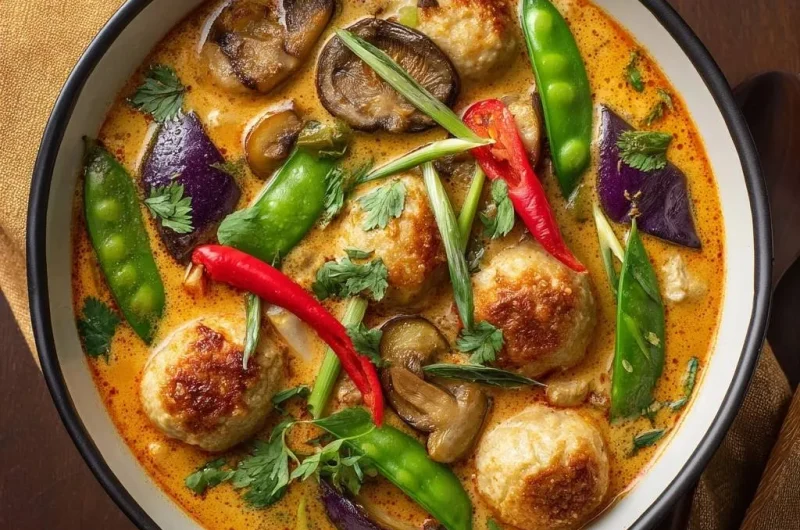
Thai Yellow Curry Fish Balls
Course: Main CourseCuisine: ThaiDifficulty: easy4
servings15
minutes20
minutes450
kcal35
MinutesTired of Thai curry that thins out? This recipe locks in thick, creamy texture by frying the curry paste to release oils, then gradually whisking in coconut milk while simmering low and slow to emulsify and reduce perfectly every time.
Ingredients
1 tablespoon vegetable oil
3 tablespoons yellow curry paste
2 cans (14 oz each) full-fat coconut milk
1 pound frozen fish balls, thawed
1 medium eggplant, sliced into half-moons
8 oz snow peas, trimmed
8 oz mushrooms, sliced
2 red chilies, sliced
4 green onions, chopped
1/2 cup fresh cilantro leaves
Salt to taste
Directions
- Heat oil in a large pot over medium heat. Add yellow curry paste and fry for 3-4 minutes, stirring constantly until fragrant and oils start to separate. This builds the flavor base without burning.
- Pour in 1/2 cup coconut milk from one can. Whisk vigorously for 2 minutes until paste fully dissolves and sauce thickens slightly. This is the key step that prevents separation and watery sauce.
- Add remaining coconut milk, fish balls, eggplant, mushrooms, and chilies. Bring to a gentle simmer. Cook uncovered for 10 minutes, stirring occasionally, until sauce reduces and coats everything thickly.
- Stir in snow peas and green onions. Simmer 3-4 more minutes just until peas are crisp-tender. Do not boil hard, or sauce will thin.
- Taste and add salt if needed. Remove from heat. Garnish with cilantro. Serve hot with rice. The sauce stays velvety and never watery thanks to the paste-frying and gradual milk addition.
Notes
- Use full-fat coconut milk for best texture. Fry paste until oils separate to prevent watery sauce. Simmer gently, do not boil hard.