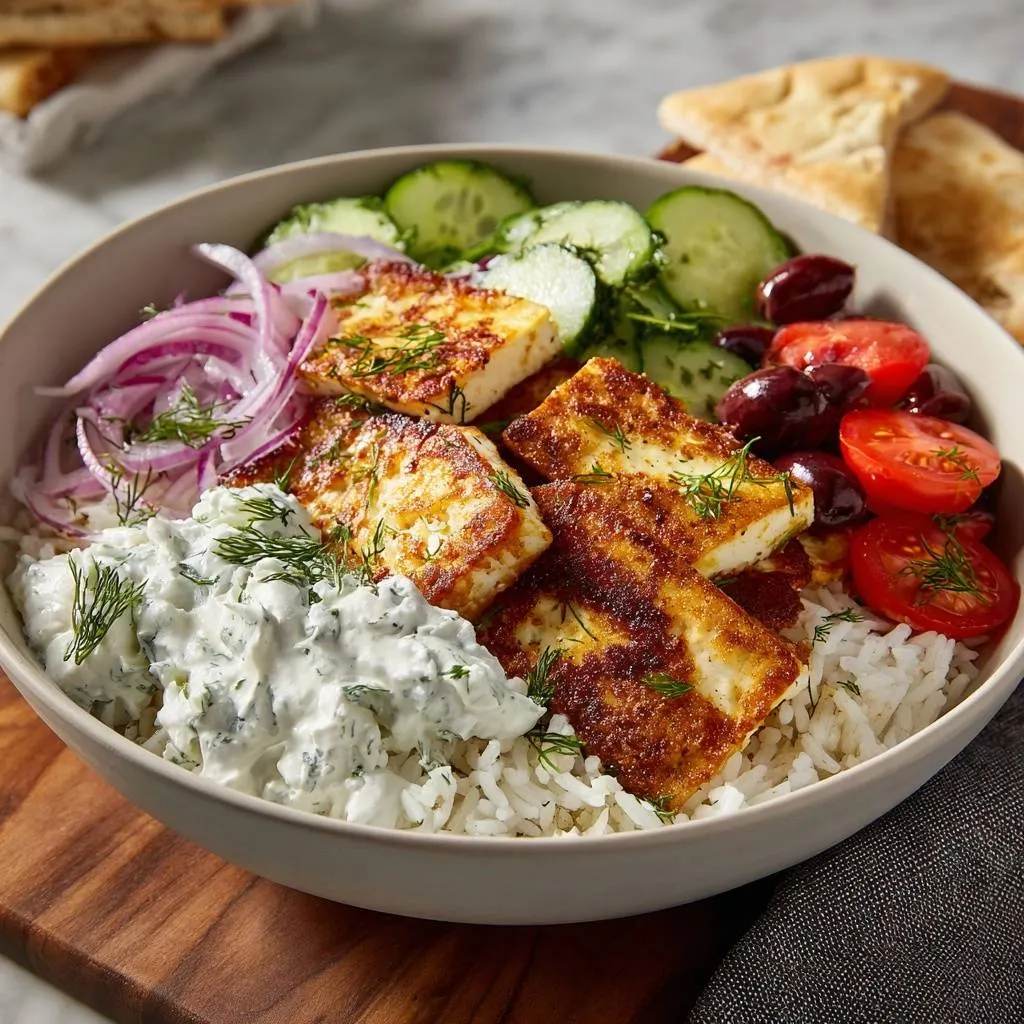
Ever bite into halloumi that squeaks like rubber tires? It ruins the whole Greek Halloumi Rice Bowl vibe. This recipe nails crispy edges and juicy centers with a high-heat dry-fry trick. You’ll have dinner ready in 20 minutes, bursting with fresh Mediterranean flavors.
Why does this Greek Halloumi Rice Bowl stand out? Traditional methods steam the cheese, leaving it tough. However, our technique evaporates moisture fast for perfect texture. In addition, the homemade tzatziki ties everything together without watering down the bowl.
Here’s the pro tip that seals it: pat the halloumi extra dry before frying. That simple step prevents steaming and delivers golden crispness every time. Trust me, your first bite won’t squeak; it’ll crunch and melt.
For more tips on getting that perfect texture, check out how to achieve golden, crispy halloumi in this power bowl.
Core Components for Greek Halloumi Rice Bowl
Warm Rice Foundation
Warm 1 cup cooked white rice forms the perfect base for your Greek Halloumi Rice Bowl. It soaks up those bright flavors from veggies and tzatziki without turning mushy. First, reheat it gently in the microwave or on the stove with a splash of water.
White rice cooks fast and fluffs up nicely. However, try basmati for nutty aroma or brown rice for extra fiber and chew. Therefore, it adds nutrition while keeping the bowl hearty and satisfying.
Don’t skip warming it. Cold rice makes the bowl clammy. A hot foundation ensures every forkful feels fresh and comforting.
Halloumi Cheese Preparation Essentials
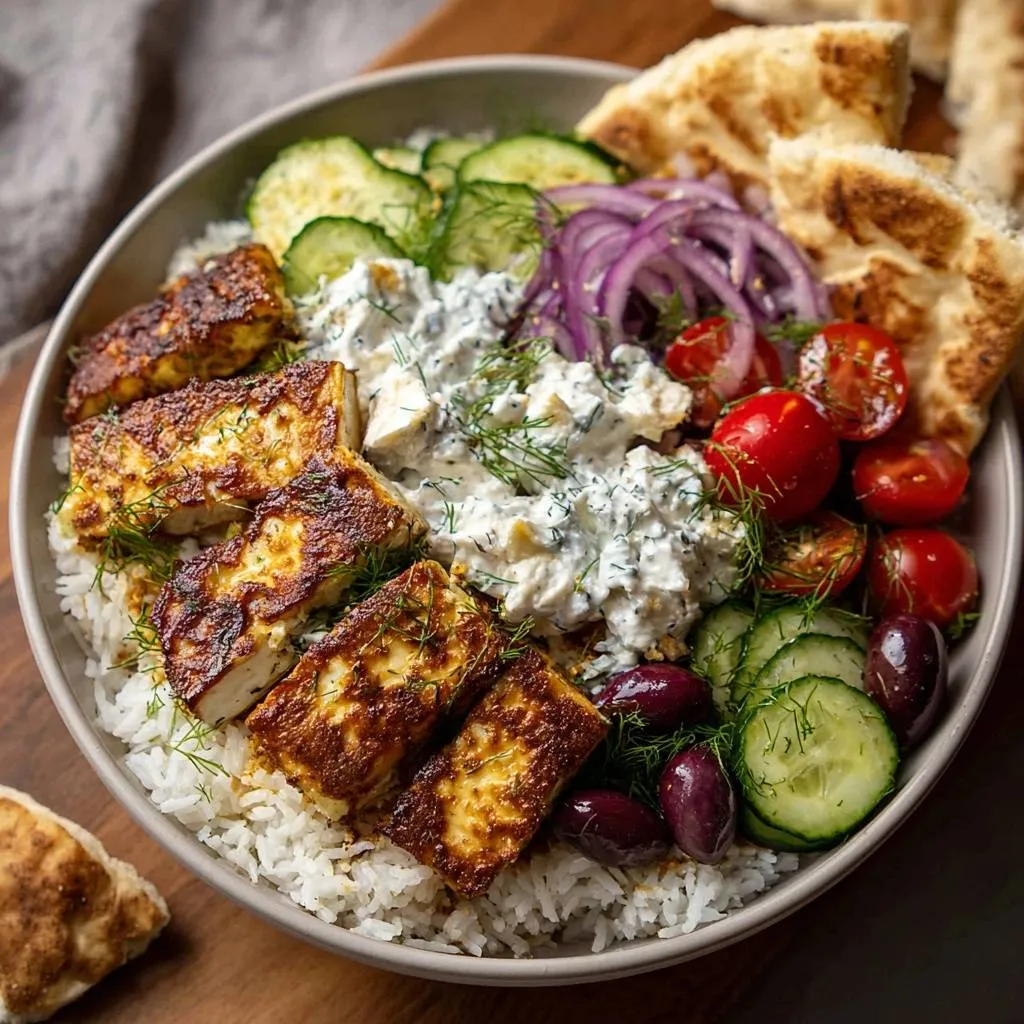
Start with 8 oz halloumi, cut into 1-inch cubes for even cooking in your Greek Halloumi Rice Bowl. This size browns quickly without drying out the inside. Pat them ultra-dry with paper towels; moisture is the enemy here.
Halloumi from Cyprus shines because its sheep and goat milk blend holds up to high heat. The dry patting forces crisp searing over steaming. As a result, you get that irresistible contrast of crunchy outside and soft center.
Pro tip: if your halloumi feels damp from the package, press it between towels for 5 minutes. This extra effort pays off big time.
Fresh Vegetable Mix Ratios
Slice 1 large cucumber thinly for crisp crunch in the Greek Halloumi Rice Bowl. Add 1/2 red onion in rings for sharp bite, 1 cup halved cherry tomatoes for juicy pops, and 1/2 cup pitted kalamata olives for salty brininess. These ratios balance freshness and flavor perfectly.
Use a mandoline for even cucumber slices; it keeps them snappy. Halve tomatoes just before assembly to avoid excess liquid. Therefore, your bowl stays vibrant and textured.
Arrange them radially around the rice. This setup lets you grab a bit of everything in one bite, plus it looks stunning.
Homemade Tzatziki Thickness Secret
Mix 1 cup plain Greek yogurt with 1/4 cup grated cucumber for thick tzatziki in your Greek Halloumi Rice Bowl. Grate the cucumber fine, then squeeze out every drop of moisture with a clean kitchen towel. Twist and press hard; you’ll be amazed at the water that comes out.
Stir in 2 tbsp chopped fresh dill and a pinch of salt. Chill it for 10 minutes so flavors meld. Store-bought often runs watery, but this stays creamy and scoopable.
Full fat yogurt clings better to the halloumi. Therefore, it creates that cool, garlicky contrast you crave.
Pita and Dill Garnish Role
Warm 4 pita breads gently in a dry skillet or oven. They become soft and pliable for scooping up the Greek Halloumi Rice Bowl. Fresh dill sprigs add a feathery green pop and herbal brightness on top.
Dill isn’t just pretty; it cuts through the richness. Serve pita on the side for authentic meze-style eating. In addition, it soaks up tzatziki like a dream.
High-Heat Halloumi Frying Technique
Skillet Preheating for Crisp Edges
Heat a nonstick skillet over medium-high for 2 full minutes until it smokes faintly. This blasts the halloumi with intense dry heat for your Greek Halloumi Rice Bowl. Add 1 tbsp olive oil and swirl to coat evenly.
Nonstick prevents sticking without excess oil. Never crowd the pan; cook in batches if needed. Therefore, every cube gets direct contact and crisps up golden.
You’ll smell the savory transformation right away. It’s the sign you’re on track for perfection.
Dry-Patting to Eliminate Squeak
Pat halloumi cubes bone-dry with paper towels before frying. Surface moisture turns to steam, causing that annoying squeak in Greek Halloumi Rice Bowls. Dry patting lets heat crisp the exterior instantly.
Think physics: water boils off fast, leaving proteins to brown via Maillard reaction. Wet halloumi steams rubbery; dry halloumi turns tender-crisp. The difference hits your mouth like night and day.
Common pitfall: skipping this. Do it twice if they’re fridge-cold for foolproof results.
Undisturbed Searing Timing
Add dry halloumi in a single layer. Sear undisturbed for 2 to 3 minutes until deep golden crust forms. Flip once with tongs, then cook 2 more minutes.
This timing triggers perfect browning without overcooking the inside. Remove to paper towels immediately to stop residual heat. As a result, you lock in juiciness.
Pro tip: listen for a light sizzle fade; that’s your cue to flip.
Halloumi Internal Texture Science
High heat evaporates moisture quick, denaturing proteins for a tender core. Slice one open: crisp shell gives way to melty center, no squeak. Grilling or baking can’t match this sear.
Visual cue: edges curl slightly when ready. Therefore, your Greek Halloumi Rice Bowl gets unbeatable texture contrast.
Bowl Assembly Sequence for Balance
Layering Rice and Veggies First
Spoon warm rice into the bowl center. Arrange cucumber slices, onion rings, tomatoes, and olives around the edges radially. This keeps veggies crisp and colors pop in the Greek Halloumi Rice Bowl.
Radial layout prevents wilting from heat. Everyone grabs balanced bites easily. Plus, it looks like a pro made it.
Centering Tzatziki Dollop
Add a generous spoonful of chilled tzatziki right in the middle. It acts as a creamy hub, binding flavors without soaking the rice. Use about 1/4 cup per bowl for portion control.
The chill cuts the halloumi’s warmth perfectly. Therefore, every element shines.
Hot Halloumi Topping Finish
Pile hot fried halloumi cubes high on top. Scatter fresh dill sprigs for aroma and color. Serve with warm pita immediately.
Stir at the table if you like mixing. The heat from halloumi slightly warms everything just right. Dig in while it’s hot!
Greek Halloumi Rice Bowl Origins
Halloumi Roots in Cyprus Tradition
Halloumi hails from Cyprus, crafted from sheep and goat milk then brined for shelf life. Shepherds grilled it over fires for portable protein. Greeks adopted it through Mediterranean trade, loving its heat-proof squeak (when done right).
Today, it stars in modern bowls like this Greek Halloumi Rice Bowl. The brining adds tangy depth that pairs with fresh veggies. Therefore, it feels timeless yet fresh.
Rice Bowl Adaptation in Greek Cuisine
Greek tavernas serve meze platters with pilaf sides. This bowl fuses ancient rice dishes with yogurt dips from Ottoman roots. Tzatziki evolved there, adding creaminess to grilled cheeses.
Round Out Your Meal
To accompany your Greek Halloumi Rice Bowl, consider these vibrant Mediterranean starters.
- For a similar zest, explore a Loaded Greek Hummus Platter, featuring creamy chickpea dip layered with fresh ingredients.
- If you enjoy robust Mediterranean flavors, try the Loaded Mediterranean Hummus Platter for a variety of textures and tastes.
It’s a modern take on casual eating. However, it keeps authentic flavors intact. You’ll taste the heritage in every bite.
Flavor Variations for Greek Halloumi Rice Bowl
Spicy Feta-Herb Swap
Sprinkle crumbled feta and chili flakes over the top. Swap some dill for oregano or mint for herbal twist. Start with 1/2 tsp flakes; taste and add more heat.
This amps brininess and fire without overpowering. It’s a crowd favorite for spice lovers.
Protein Boost Options
Grill chicken strips or add chickpeas alongside halloumi. Both keep the Greek profile with extra heft. For vegan, fry extra-firm tofu cubes in the same method.
For more protein ideas, consider trying Mediterranean beef meatballs.
Chickpeas roast crisp at 400F for 15 minutes. Therefore, nutrition jumps while flavors stay true.
Seasonal Veggie Twists
Summer? Ribbon zucchini instead of cucumber. Winter? Roast peppers for smoky sweetness. Always aim for crunch and color balance.
Source local for peak freshness. It elevates the whole bowl effortlessly.
Avoiding Halloumi Pitfalls in Rice Bowls
Preventing Watery Tzatziki Disasters
Squeeze grated cucumber over a bowl first, then wring in a towel. Use full-fat yogurt; low-fat weeps. Chill no more than 24 hours or it thins.
Runny fix: stir in more yogurt. Therefore, your Greek Halloumi Rice Bowl stays thick and lush.
Fixing Overcooked or Squeaky Cheese
Overcooked? Re-fry briefly on high to crisp mushy bits. Squeaky means wet patting failed; dry more next time. Check for golden before flipping.
Visuals: edges should lift slightly. This saves most batches.
Balancing Onion Sharpness
Soak thin onion rings in ice water for 10 minutes, then drain. It mellows bite for sensitive eaters. Tweak ratio down to 1/4 onion if needed.
Pairing Sides with Greek Halloumi Rice Bowl
Classic Greek Salad Complement
Pair with horiatiki salad: cucumbers, tomatoes, olives minus bowl overlaps. Keep portions small to avoid veggie overload. Sparkling lemon tea refreshes the palate nicely.
It doubles down on Greek vibes without excess.
Grain-Free Alternatives
Swap rice for cauliflower rice; pulse and sauté dry. Quinoa adds protein pop with similar fluff. Maintain textures by not overcooking.
Low-carb win that still satisfies.
Greek Halloumi Rice Bowl FAQ
Can I Prep Tzatziki Ahead?
Yes, make tzatziki up to 3 days early in an airtight container. Cucumber moisture can weep, so stir before using and drain if needed. Flavors deepen beautifully over time, making it even tastier on day two.
Best Rice Type for This Bowl?
White rice heats quickest and absorbs flavors without heaviness. Brown rice brings fiber and chew; cook with 2:1 water ratio and fluff well. Basmati adds fragrant lift to the Greek Halloumi Rice Bowl.
How to Reheat Halloumi Crisps?
Air fry at 400F for 2 minutes to revive crispness; skip microwave or it sogs. Best eaten fresh, but this works within 1 day. Pat dry first for best results.
Vegan Version Possible?
Absolutely: fry extra-firm tofu cubes using the same dry high-heat method. Swap yogurt for coconut or cashew-based tzatziki. Keep olives, veggies, and rice; add grilled eggplant for meaty texture. Full Greek flavors intact.
Scaling for Meal Prep?
Double the recipe; it stores 4 days in fridge portions. Layer rice, cold veggies, then tzatziki and halloumi separate to avoid sogginess. Reheat rice and halloumi first, add fresh toppings last.
How Do I Store Leftovers?
Keep assembled Greek Halloumi Rice Bowl in airtight containers up to 3 days in fridge. Halloumi softens but crisps on re-fry. Don’t freeze; rice gets mushy and tzatziki separates oddly.
Why Is My Halloumi Still Squeaky?
Usually not dry enough or low heat caused steaming. Pat drier next time and ensure skillet smokes hot first. High heat evaporates moisture fast for crisp, silent bites every time.
Can I Substitute Halloumi?
Panela or queso fresco works for mild fry; tofu for vegan. Avoid low-melt cheeses like mozzarella. Stick close to halloumi’s firm texture for authentic Greek Halloumi Rice Bowl results.
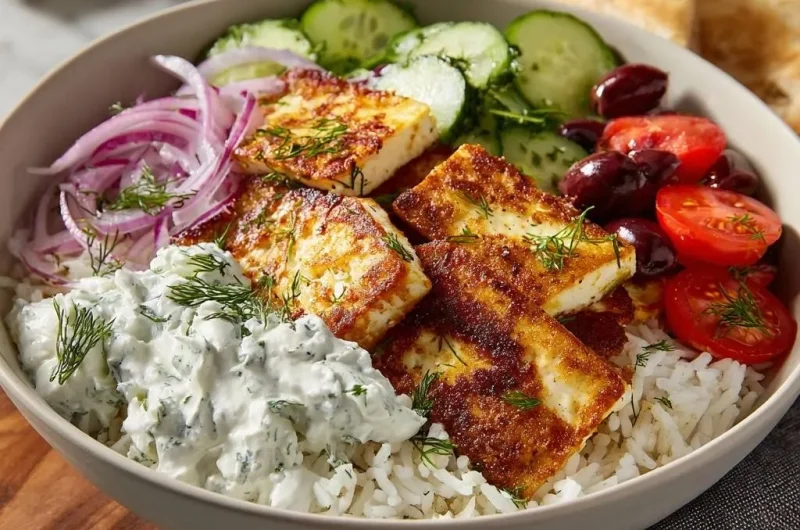
Greek Halloumi Rice Bowl
Course: Main CourseCuisine: GreekDifficulty: easy4
servings15
minutes10
minutes750
kcal25
MinutesTired of halloumi that squeaks like rubber? This bowl uses a high-heat dry-fry technique for crisp edges and juicy centers. Topped with fresh veggies, tzatziki, and served with pita.
Ingredients
1 cup cooked white rice, warm
8 oz halloumi cheese, patted dry and cut into 1-inch cubes
1 large cucumber, thinly sliced
1/2 red onion, thinly sliced into rings
1 cup cherry tomatoes, halved
1/2 cup pitted kalamata olives
1 cup tzatziki (mix 1 cup plain Greek yogurt, 1/4 cup grated cucumber squeezed super dry, 2 tbsp chopped fresh dill, pinch of salt)
Fresh dill sprigs for garnish
4 pita breads, warmed
Directions
- Prepare tzatziki: Grate cucumber, squeeze out all moisture using a clean kitchen towel. Stir into yogurt with dill and salt. Chill while prepping. This squeeze step keeps it thick, not watery.
- Warm rice in a bowl. Arrange sliced cucumber, onion, tomatoes, and olives around the edges.
- For no-squeaky halloumi (the star fix): Pat cubes extra dry with paper towels, removing all surface moisture, this prevents steaming and squeaking. Heat a nonstick skillet over medium-high heat for 2 minutes until smoking hot. Add 1 tbsp olive oil, swirl to coat. Add halloumi in a single layer, no crowding. Cook undisturbed 2 to 3 minutes until deep golden and crispy. Flip once, cook 2 minutes more. Remove immediately to paper towels. The high heat evaporates moisture fast for crisp outside, tender inside, zero squeak.
- Spoon tzatziki into bowl center. Top with hot halloumi and dill sprigs. Serve with warm pita on side. Dig in!
Notes
- Key to no-squeaky halloumi: Pat extra dry and use smoking-hot skillet to evaporate moisture fast for crisp outside and tender inside.