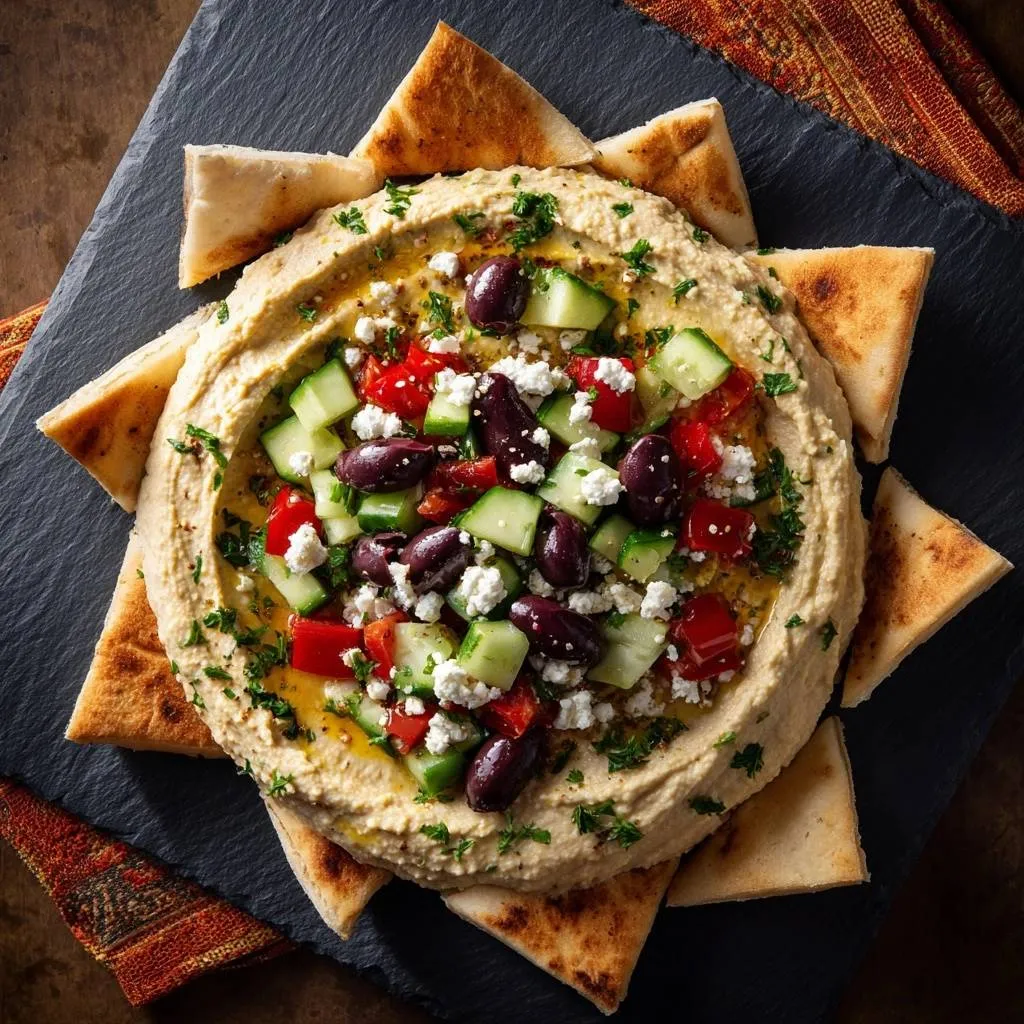
Ever scooped up homemade hummus only to hit that annoying gritty texture? It kills the vibe every time. This Loaded Greek Hummus Platter fixes that with a quick chickpea skin removal trick. You’ll get impossibly smooth dip that scoops like velvet, piled high with fresh Greek toppings.
That’s why this recipe stands out. Most hummus fails because those tiny skins make it grainy, no matter how long you blend. However, peeling them off takes just minutes and transforms everything into party-worthy creaminess.
For a similar creamy indulgence, explore velvet-smooth whipped feta.
The secret lies in using cool water for peeling. It loosens the skins without cooking the chickpeas. In addition, reserved aquafaba whips in light and airy. Trust me, your guests won’t stop dipping.
For a different burst of color, explore vibrant beet hummus with pistachios.
Core Ingredients for Loaded Greek Hummus Platter
Chickpeas and Aquafaba: Texture Foundation
Canned chickpeas work best here because they’re already cooked soft. Drain and rinse them well first. However, reserve that aquafaba, the starchy liquid, for blending. It acts like a natural emulsifier, creating fluffiness without dairy.
Skins cause graininess by not breaking down fully. Rub them off in cool water, and 90% slip away easily. Peeling yields silky hummus, unlike unpeeled versions that stay sandy even after extra blending time.
Tahini, Lemon, Garlic: Flavor Balance Essentials
Grab quality tahini, the sesame paste with smooth texture and nutty depth. Stir it well before measuring since oil separates. Fresh lemon juice brings bright acidity that bottled can’t match. It wakes up the flavors.
Mince garlic finely for even distribution. Crush it first, then chop to release sweetness without raw bite. Sea salt enhances the Mediterranean punch. Start with 1/2 teaspoon and adjust after tasting.
Olive Oil Role in Richness and Drizzle
Extra virgin olive oil emulsifies during blending for smoothness. Its fruity notes pair perfectly with Greek toppings. Use a good one for the mix, but any will do for the final drizzle.
That drizzle adds shine and richness right before serving. It ties the toppings together visually and in taste. Drizzle generously for that authentic taverna look.
Loaded Greek Hummus Platter Origins and Evolution
Hummus traces back to Middle Eastern kitchens, a simple chickpea mash with tahini and lemon. Greeks adapted it into mezze platters for sharing in tavernas. Loaded versions with feta and olives became staples at gatherings.
Complementary Dishes
To round out your meal, consider these complementary recipes featuring similar Mediterranean flavors.
- For a bright seafood option that complements the fresh flavors of the Greek Hummus Platter, try these Grilled Shrimp Skewers with Feta Tomatoes and Pesto Couscous.
- If you enjoy the combination of cheese and grains, this Greek Halloumi Rice Bowl with Crispy No-Squeak Cheese offers a satisfying vegetarian alternative with similar regional influences.
Today, the Greek-style hummus board shines at parties. Fresh toppings contrast the creamy base. It’s all about community, scooping together with warm pita. This evolution keeps the dish vibrant and social.
Equipment Choices for Perfect Hummus Texture
Food Processor Power for Emulsification
A food processor beats blenders with wider blades and bowl space. It handles chickpeas without overheating. Affordable models under $100 deliver pro-level smooth results.
Clean it easy post-aquafaba by running water with a drop of dish soap. Pulse briefly. Dry thoroughly to avoid rust.
Platter and Tools for Stunning Presentation
Choose a large wooden or ceramic platter for impact. It holds the spread without crowding. A sharp paring knife dices cucumber precisely.
A clean kitchen towel rubs chickpeas effortlessly. It catches skins without mess. Simple tools make pro results achievable.
Step-by-Step: Creamy Base for Loaded Greek Hummus Platter
Chickpea Skin Removal Technique
Place drained chickpeas in a big bowl. Cover with cool water. Gently rub between your hands for 1-2 minutes. Skins float off easily.
Drain and discard skins and water. You’ll see 90% gone, promising velvet texture. This step prevents grit completely. Don’t skip it.
Blending Hummus to Silky Perfection
Add peeled chickpeas, tahini, lemon juice, olive oil, garlic, and salt to the processor. Blend on high. Slowly pour in aquafaba, one tablespoon at a time.
Scrape sides often for even blending. It takes 2-3 minutes to turn light and creamy. Taste and tweak lemon or salt now. Pro tip: chill briefly for firmer spreading.
Assembling Vibrant Toppings on Hummus Platter
Dicing Cucumber and Tomatoes Precisely
English cucumbers have no seeds, so they stay crisp. Dice finely for bite-sized pieces. Quarter cherry tomatoes to release less water.
Uniform cuts cling better to hummus. Pat dry if needed. They add cool crunch against the creaminess.
Layering Olives, Feta, Parsley Artfully
Pit kalamata olives by pressing gently with a knife. Halve them for easy scooping. Crumble feta by hand for chunky texture.
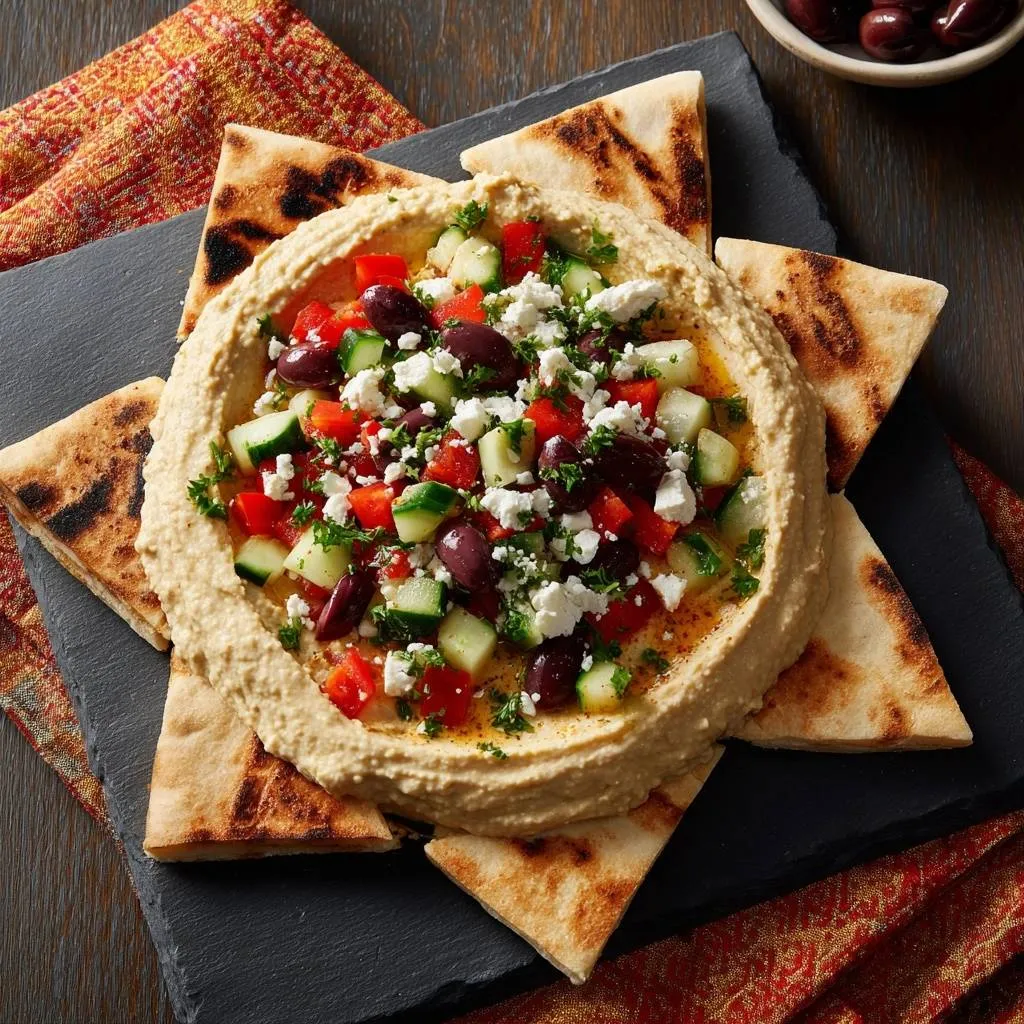
Chop parsley fine to sprinkle without wilting. Spread hummus thick, make a central well. Layer toppings evenly, finish with olive oil drizzle in swirls.
Pita Wedges: Toasting for Crisp Pita Dippers
Cut each pita into 8-10 wedges. Toast in a 350°F oven for 5 minutes. Or use a dry skillet over medium heat.
Warm pita holds up to dipping without sogginess. Arrange around the platter edge. It elevates the whole Loaded Greek Hummus Platter experience.
Science of Smooth Loaded Greek Hummus Platter
Aquafaba emulsifies like egg whites, binding oil and water. Tahini stabilizes those fats for lasting creaminess. Lemon activates pectin in chickpeas for natural thickness.
pH balance from lemon prevents separation. Peeled chickpeas lack gritty cellulose. Ultra-creamy Greek hummus results from this perfect harmony. No fancy additives needed.
Avoiding Pitfalls in Greek Hummus Platter Prep
Grainy Texture Fixes and Prevention
Unpeeled skins are the top grit culprit. Under-blending leaves them detectable. Cool water peeling works better than warm, which toughens chickpeas.
Avoid over-blending; it warms and separates fats. Pulse steadily for best results.
Topping Freshness and Soggy Hummus Solutions
Assemble right before serving to keep toppings crisp. Drain cucumber well. Use less salty feta to control moisture.
Serve at room temp. Fridge chills make hummus firm but dull flavors.
Flavor Twists for Loaded Greek Hummus Platter
Herb and Spice Swaps for Variety
Swap parsley for dill or mint for brighter notes. Roast garlic first for mellow sweetness. Add cumin or za’atar for earthy kick.
Vegans, try crumbled tofu or cashew “feta.” These keep the Greek vibe alive.
Seasonal Topping Refreshers
Summer calls for bell peppers and radishes. Winter gets roasted beets or pomegranate seeds. Add yogurt swirls or artichokes to stay thematic.
Freshness rules every season. It keeps your Loaded Greek Hummus Platter exciting.
Pairing Sides with Loaded Greek Hummus Platter
Carrot and celery sticks add crunch. Marinated artichokes bring tang. Sparkling cranberry juice cuts through richness nicely.
Scale up for 20 guests by doubling everything. Use two platters. Your Greek-style hummus board becomes the party hero.
Storage Guide for Greek Hummus Platter Leftovers
Store plain hummus in an airtight container up to 3 days in the fridge. Freeze the base in portions; thaw and re-blend smooth. Keep toppings separate to stay fresh.
Revive pita by toasting. Don’t freeze assembled platters; toppings wilt.
Troubleshooting Loaded Greek Hummus Platter Issues
Too Thick or Runny Hummus Adjustments
Too thick? Add aquafaba one tablespoon at a time. Runny? Blend in more oil or chill to set. Balance comes quick with tweaks.
Flavor Imbalance Corrections
Lemon overload? Stir in plain yogurt to mellow. Dull garlic? Add fresh minced and pulse briefly. Taste as you go always.
Presentation Woes and Fixes
Uneven hummus? Use a spatula offset for smooth spreading. Toppings slip? Press lightly into the well. Drizzle oil last for gloss.
Common Questions on Loaded Greek Hummus Platter
Can I Use Dry Chickpeas Instead?
Yes, soak dry chickpeas overnight, then simmer until very tender, about 1-2 hours. Use 2/3 cup dry for two cans’ worth. Drain well and peel. They offer fresher taste but take more time than canned.
How Long Does Assembled Platter Last?
Serve within 1-2 hours for peak crispness. Toppings soften fast. Replate fresh for rounds two and three.
Gluten-Free Options for This Platter?
Swap for gluten-free pita or corn tortillas. Add veggie dippers like carrots. Tahini and rest are naturally GF.
Scaling for Large Crowds?
Double or triple ingredients proportionally. Blend in batches if processor’s small. Use larger platters, like 18-inch boards for 20 people. Prep toppings ahead.
Nutritional Breakdown Per Serving?
About 250 calories per serving with 10g protein from chickpeas and feta. Healthy fats from tahini and oil. Go vegan by skipping feta for lower calories. Fiber-packed and satisfying.
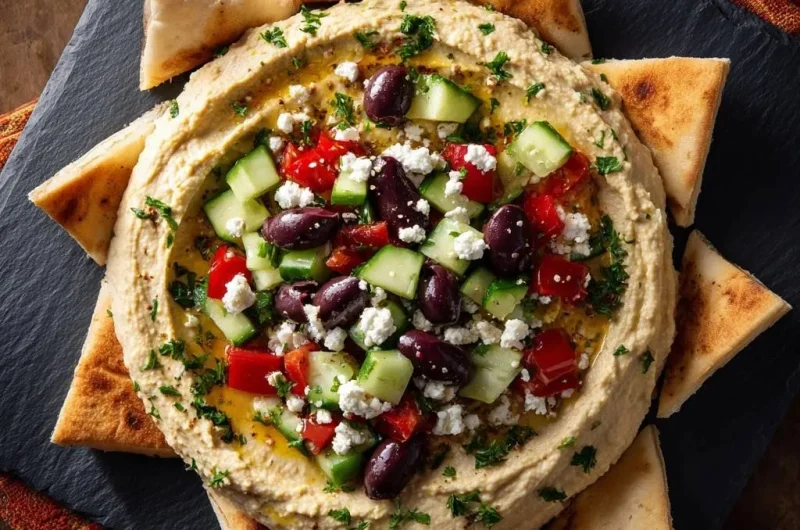
Hummus Platter
Course: AppetizerCuisine: GreekDifficulty: easy8
servings20
minutes250
kcal20
MinutesSay goodbye to gritty homemade hummus that ruins the dip experience. This recipe uses a simple chickpea skin removal trick for impossibly creamy texture, piled high with fresh toppings and pita for the ultimate party board.
Ingredients
Hummus:
2 (15 oz) cans chickpeas, drained and rinsed
1/4 cup tahini
1/4 cup fresh lemon juice
1/4 cup olive oil, plus extra for drizzling
2 garlic cloves, minced
1/2 tsp salt
1/4 cup reserved chickpea liquid (aquafaba)
Toppings:
1/2 English cucumber, finely diced
1 cup cherry tomatoes, quartered
1/2 cup kalamata olives, pitted and halved
1/2 cup feta cheese, crumbled
1/4 cup fresh parsley, chopped
Serve with:
6 pita breads, cut into wedges
Directions
- Make ultra-smooth hummus: Place drained chickpeas in a large bowl. Cover with cool water and gently rub them between your hands or with a clean kitchen towel for 1-2 minutes. Most skins will slip off easily drain and discard skins along with water. This quick step removes the gritty culprit for silky results every time.
- In a food processor, combine peeled chickpeas, tahini, lemon juice, olive oil, garlic, and salt. Blend on high, slowly adding reserved aquafaba 1 tablespoon at a time until creamy and light, about 2-3 minutes. Scrape sides as needed. Taste and adjust lemon or salt.
- Spread hummus thickly on a large platter, creating a shallow well in the center.
- Arrange toppings: Scatter diced cucumber, tomatoes, olives, feta, and parsley evenly over hummus. Finish with a generous olive oil drizzle.
- Toast pita wedges lightly if desired, and arrange around the platter. Serve immediately for maximum freshness. Dig in with pita!
Notes
- Removing chickpea skins is key for silky smooth texture. Use aquafaba for extra creaminess without overpowering flavors.