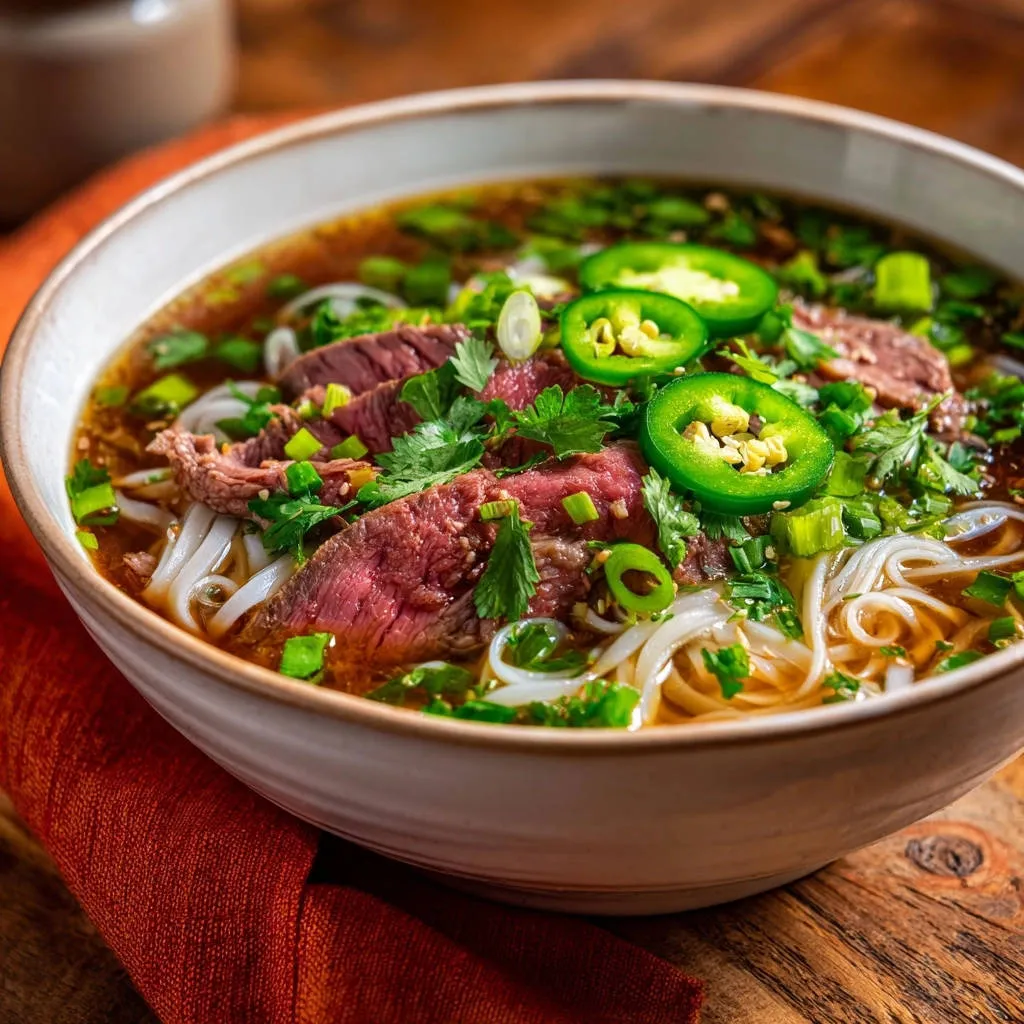
I remember the frustration of trying to make homemade noodle soup; the broth was always perfect, but the beef always ended up gray, tough, and chewy. After years of testing, I finally cracked the essential technique for achieving melt-in-your-mouth tenderness, transforming the entire experience.
This specific recipe for Quick Homemade Beef Noodle Soup focuses entirely on mastering that silky texture using simple flash-cooking, ensuring a deeply satisfying and restaurant-quality result every time.
For more ideas on achieving that tender beef, explore this saucy beef ramen.
The Noodle Soup Secret: Why Home Cooks Struggle with Tough Beef
Most home recipes fail because they attempt to simmer the beef, which causes the muscle fibers to seize up, resulting in dry, gray, and chewy meat.
For a different noodle experience with tender beef, try this beef noodle stir fry.
The true secret to incredible tenderness lies in the precision of the cut and aggressive heat application right at the moment of serving.
We bypass the lengthy simmering process entirely by using a specialized slicing technique followed by an instant, in-bowl flash-cook, which guarantees a velvety, slightly pink finish.
Building the Perfect Bowl: Essential Ingredients for Flavor Depth
The Foundation: Choosing Quality Beef Stock
Quality beef stock is non-negotiable, acting as the entire base flavor for this quick preparation method.
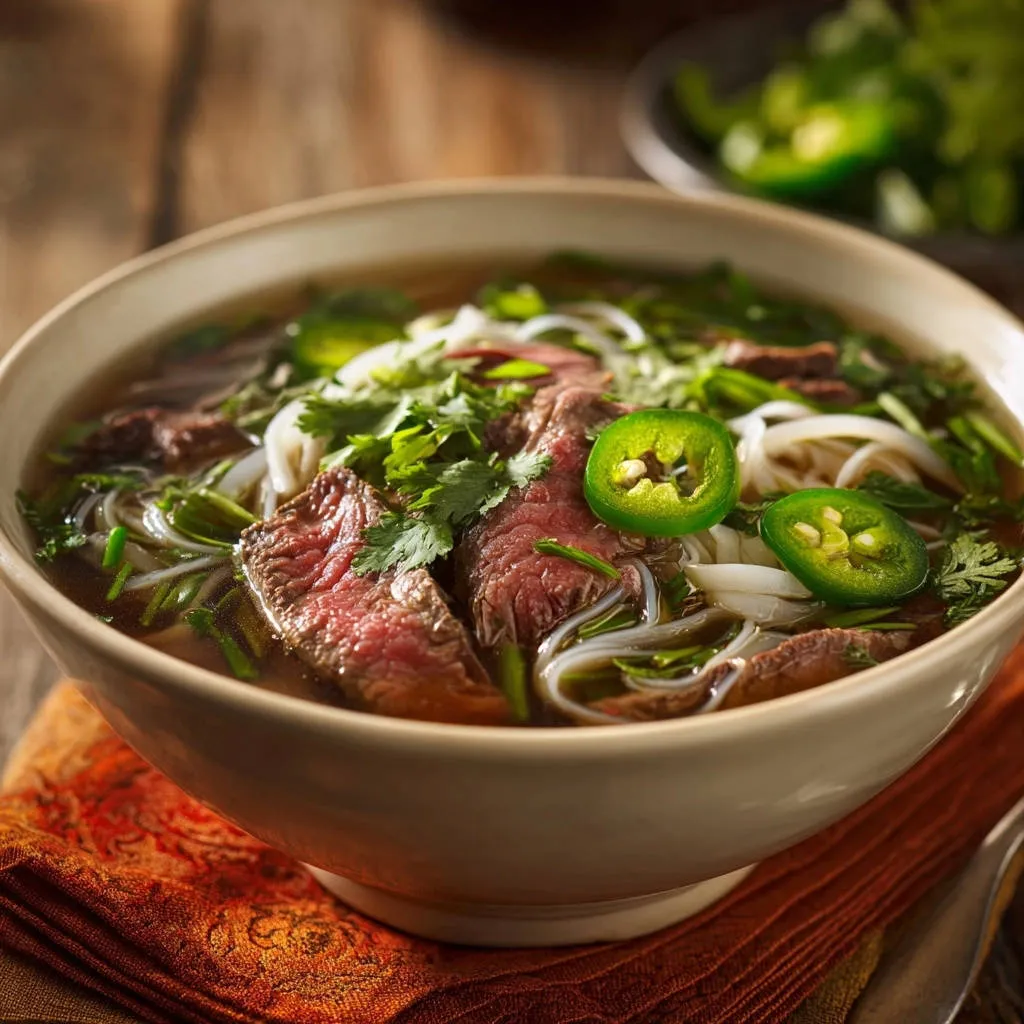
Avoid thin, watery stock; look for deep, bone-broth quality stock or high-grade concentrates for foundational richness and complexity.
Slicing Success: Selecting the Right Steak Cut
Sirloin or ribeye are optimal choices because they are naturally tender and have minimal tough connective tissue.
Since the meat cooks quickly, these cuts tenderize instantly, unlike cheaper cuts that require hours of slow braising.
The Aromatic Trinity: Ginger, Five Spice, and Umami Agents
Five spice powder provides essential warmth, balancing star anise, cinnamon, and fennel notes that define the flavor profile.
Fresh ginger and smashed garlic infuse the broth with a sharp, cleansing heat during the simmering process.
Fish sauce (or tamari) is the required umami agent, delivering salinity and complexity that ordinary table salt simply cannot replicate.
Beyond Flavor: The Role of Garnishes
Fresh scallions and cilantro are essential, adding a vital burst of herbal freshness that cuts through the richness of the broth.
More Ideas
Round out your meal with these refreshing salads.
- For a bright and zesty addition, try this Sesame Ginger Chicken Salad, featuring a lively dressing that complements the richness of the soup.
- If you prefer a bit of crunch, this Crispy Asian Chicken Salad offers a satisfying texture contrast alongside your beef noodles.
The sliced jalapeño provides immediate heat and a necessary textural crunch to contrast the soft noodles and tender beef.
Essential Tools for Quick Beef Noodle Soup Preparation
A Very Sharp Chef’s Knife: Essential for achieving the paper-thin slices required for guaranteed tenderness.
Deep, Large Serving Bowls: Necessary to hold the boiling broth and retain enough heat to cook the beef properly.
Freezer Space/Baking Sheet: Used temporarily for firming the beef before slicing.
Crafting Your Quick Homemade Beef Noodle Soup: The Step-by-Step Method
- Guaranteeing Ultra-Thin Beef Slices (The Freezing Technique):
This is the most crucial step for tenderness. Partially freezing the steak for 15-20 minutes firms the meat structure, allowing you to achieve the critical paper-thinness (under 1/8 inch) needed for flash cooking.
Remember to slice diligently against the grain; slicing with the grain results in long, chewy fibers.
- Preparing the Rice Noodles (Rinsing Tip):
Cook the vermicelli only until al dente, as they will soften further when the hot broth is added.
Immediately drain the noodles and rinse them thoroughly under cold water to stop residual cooking and wash away excess starch.
Rinsing prevents the noodles from clumping together, ensuring they remain slick and separate in the serving bowl.
- Infusing the Broth Base (15-Minute Simmer):
In a pot, combine the beef stock, fish sauce, brown sugar, sliced ginger, smashed garlic, and five spice powder.
Bring the mixture to a rolling boil, then immediately reduce the heat to maintain a strong, steady simmer for the full 15 minutes.
This dedicated time allows the subtle five spice, ginger, and garlic to fully perfume the broth, which is the heart of your soup’s intense flavor.
- The Critical Moment: Assembling the Bowl and Serving:
Ensure the broth is continuously boiling right up until the moment it leaves the stove; the temperature must be aggressively hot to properly sterilize and cook the beef.
Remove the ginger and garlic from the broth, then portion the raw, ultra-thin beef slices directly over the noodles in each serving bowl.
Ladle the boiling broth immediately and gently over the beef, ensuring the meat is fully submerged. The residual heat will gently cook the beef to a perfect medium-rare, resulting in the famous melt-in-your-mouth texture.
- Final Garnish and Immediate Service:
Garnish immediately with generous amounts of fresh herbs and jalapeños.
This soup must be served and consumed instantly while the beef is still tender and the broth piping hot to maintain peak quality.
Chef’s Secrets: Elevating Broth Depth and Consistency
Toast the Spices First: If you use whole star anise or cinnamon sticks, lightly toasting them in a dry pan before adding them to the simmering broth significantly amplifies their fragrance and potency.
The Salt vs. Fish Sauce Balance: Fish sauce adds irreplaceable umami and salinity; if the broth needs more seasoning, always add more fish sauce or soy sauce, not just table salt, to maintain flavor complexity.
The Temperature is Non-Negotiable: If your broth drops below a rapid boil (212°F/100°C), the beef will par-cook slowly, resulting in a tough, gray, and potentially unsafe texture.
Troubleshooting: Common Quick Homemade Beef Noodle Soup Issues
Why is my beef still chewy after pouring the broth?
If the beef is tough, either your slices were unfortunately too thick (above 1/8 inch) or you failed to slice against the grain of the meat.
Alternatively, the most common culprit is the broth temperature; it must be brought back to a rapid, continuous boil right before ladling.
My broth tastes bland or too watery. How do I fix the flavor?
Blandness means the broth wasn’t reduced enough during the 15-minute simmer, or your base stock was weak.
To fix this, return the broth to a high boil and let it reduce by 10-15% until the flavor concentrates.
You can instantly boost the flavor profile by stirring in a teaspoon of concentrated beef paste or adding extra fish sauce.
The rice noodles clump together in the bowl. What went wrong?
This is caused by residual starch and heat. Ensure you rinse the cooked noodles thoroughly under cold water immediately after draining.
The noodles should be completely cool before being divided into the serving bowls, and they should be portioned only right before assembly.
Beyond the Classic Bowl: Serving Suggestions and Simple Swaps
Make-Ahead Prep for Weeknight Ease
The broth base (Step 3) can be made entirely ahead of time, cooled, and stored in the refrigerator for up to three days.
The paper-thin beef slices can also be prepared in advance; wrap them tightly in plastic wrap and store them on a plate in the coldest part of the refrigerator until ready to use.
Alternative Protein and Noodle Choices
This flash-cooking technique works beautifully for other quick-cooking proteins like thin-sliced chicken breast or shrimp.
Shrimp requires only seconds of exposure to the hot broth to turn opaque, so place them in the bowl last.
You can substitute the thin vermicelli for thicker banh pho noodles, but they must be cooked longer initially to account for their size and density.
Customizing the Spice Level
For significant heat, substitute the jalapeño with extremely fiery bird’s eye chilies or habaneros.
You can also add a generous spoonful of quality chili oil or chili-garlic paste directly to the serving bowl for intense flavor layers and texture.
Quick Homemade Beef Noodle Soup FAQ
Can I use pre-sliced beef intended for hot pot or shabu-shabu?
Absolutely, pre-sliced beef is an excellent option for convenience and guarantees the necessary thinness without requiring the freezing step.
However, be aware that specialized hot pot cuts may sometimes lack the robust, complex beef flavor of a freshly sliced sirloin or ribeye steak.
What is the best way to reheat leftover broth?
Do not reheat the soup once all components are mixed, as the noodles and beef will become waterlogged and severely overcooked.
The ideal approach is to reheat only the leftover broth to a rapid boil.
Use this fresh, hot broth over newly prepared noodles and raw beef, or serve it simply as a rich stock over reserved cooked vegetables and herbs.
Is there a vegetarian substitution for fish sauce?
Yes, tamari or light soy sauce provides the necessary salty umami element, though the flavor profile will shift slightly.
For a deeper, funkier umami reminiscent of fish sauce, consider adding a small pinch of powdered dried mushrooms (like shiitake) to the simmering broth.
Ready to Impress? Share Your Quick Homemade Beef Noodle Soup Masterpiece!
Mastering this one simple technique-the careful preparation and flash-cooking of ultra-thin beef-changes everything about homemade noodle soup.
This method proves that true depth of flavor and perfect texture don’t require hours in the kitchen, making it the ultimate weeknight meal.
Gather your ingredients and get ready to serve the most tender, flavorful bowl of beef noodle soup your family has ever tasted!
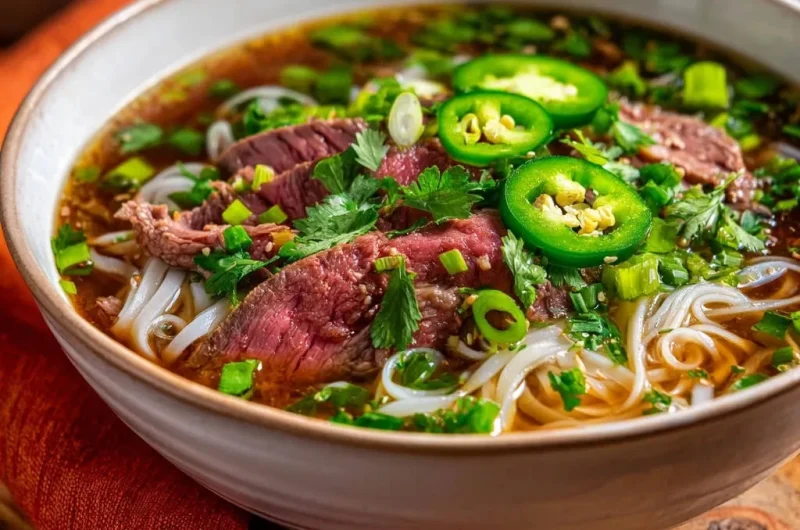
Beef Noodle Soup
Course: Soups-StewsCuisine: AsianDifficulty: easy4
servings25
minutes20
minutes450
kcal45
minutesStop settling for tough beef! This recipe guarantees melt-in-your-mouth tenderness by flash-cooking ultra-thin sirloin with piping hot broth right in the bowl. Infused with ginger, garlic, and five spice, this quick homemade soup is a flavorful weeknight staple.
Ingredients
4 cups quality beef stock
1 tablespoon fish sauce (or tamari for allergy)
1 teaspoon brown sugar
1 inch ginger, sliced
2 cloves garlic, smashed
1/2 teaspoon five spice powder
8 ounces thin rice noodles (vermicelli style)
1 pound sirloin or ribeye steak, very thinly sliced against the grain
1/2 cup scallions, chopped
1/2 cup fresh cilantro, chopped
1 fresh jalapeño, sliced
Directions
- Prepare the Beef: This step is crucial for guaranteed tenderness. Place the beef steak in the freezer for 15 to 20 minutes before slicing. This firms the meat slightly, making it much easier to slice paper-thin (less than 1/8 inch thick). Use a very sharp knife to slice the meat against the grain. Set the thin slices aside, covering them loosely.
- Cook the Noodles: Bring a pot of water to a boil. Add the rice noodles and cook according to package directions, usually 3 to 5 minutes, until tender but still slightly firm (al dente). Immediately drain the noodles and rinse them quickly under cold water to stop the cooking process and prevent them from sticking together. Divide the drained noodles evenly among four large, deep serving bowls.
- Build and Season the Broth: In a medium pot, combine the beef stock, fish sauce, brown sugar, sliced ginger, smashed garlic, and five spice powder. Bring the mixture to a rolling boil, then immediately reduce the heat to maintain a strong, steady simmer for 15 minutes to allow the flavors to infuse deeply.
- The Tenderness Technique: Remove the ginger and garlic from the broth. Make sure the broth is piping hot, maintaining a continuous boil right up until the moment of serving.
- Assemble and Serve: Place the paper-thin slices of raw beef directly on top of the cooked noodles in each bowl. Arrange them neatly over the noodles. Ladle the boiling hot broth immediately and gently over the beef and noodles, ensuring the hot liquid covers the meat completely. The residual heat of the boiling broth will gently cook the ultra-thin beef slices to a perfect medium-rare (tender and slightly pink) right in the bowl.
- Garnish: Immediately top the bowls with generous amounts of chopped scallions, cilantro, and fresh jalapeño slices. Serve right away.
Notes
- For guaranteed tenderness, do not skip the 15-20 minute freeze before slicing the beef paper-thin.