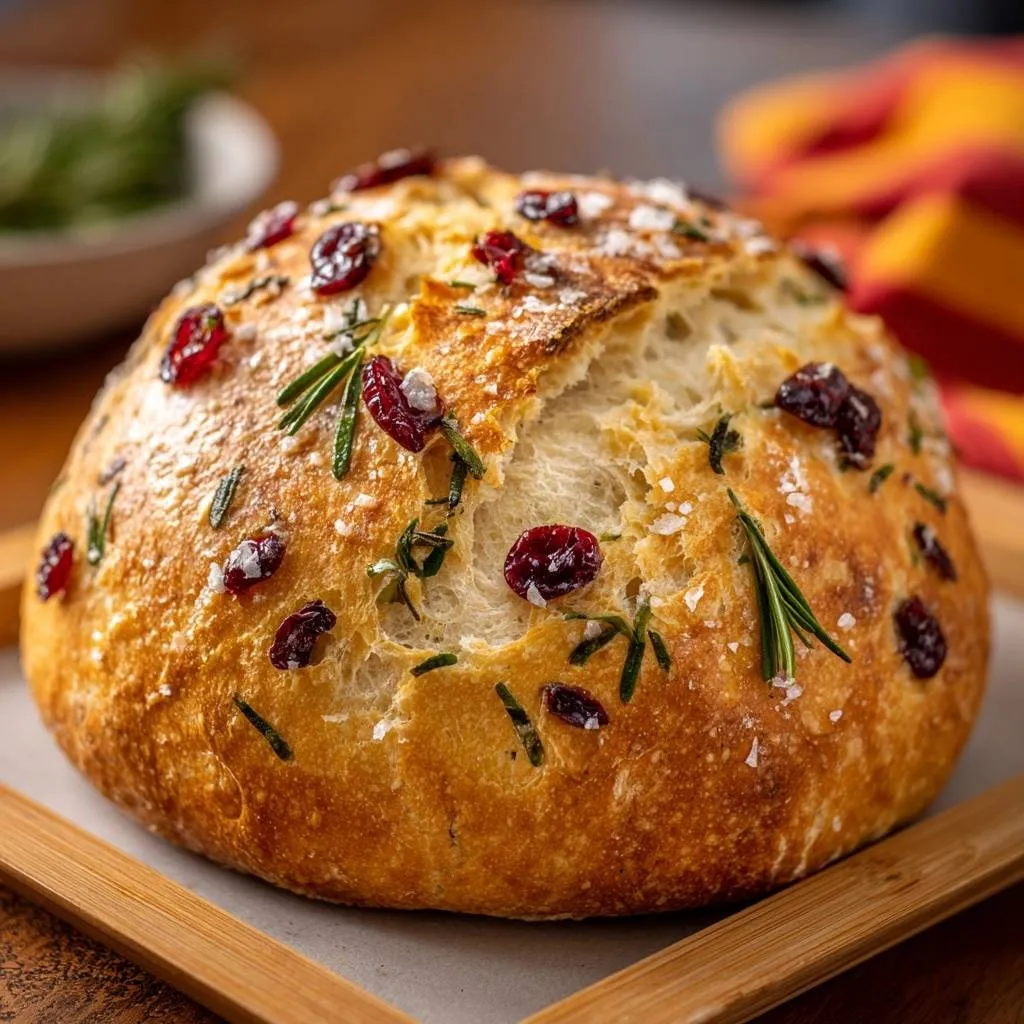
Homemade bread usually ends up with that disappointing soft, pale crust. It steams away in your home oven, never quite hitting bakery perfection. But this Cranberry Rosemary Artisan Bread changes everything with a no-knead method and Dutch oven steam for a shatteringly crispy crust every time.
Therefore, you get that professional crackle without fancy equipment or skills. The tart cranberries and earthy rosemary add a unique twist that elevates simple bread into something special. In addition, the low yeast and long rise build deep flavors busy home bakers crave.
Here’s the expertise: preheat your Dutch oven at 450°F for a full 30 minutes. That intense heat creates instant steam when you add the dough, triggering massive oven spring and the Maillard reaction for golden crispness. You’ll nail bakery-style results on your first try.
Why Cranberry Rosemary Artisan Bread Succeeds
The no-knead approach makes Cranberry Rosemary Artisan Bread accessible yet impressive. You mix a shaggy dough and let time do the work, unlike dense loaves from rushed kneading. However, the real draw is the tart-sweet cranberries paired with piney rosemary, cutting through the richness perfectly.
Low yeast ensures a slow 12-18 hour rise. This develops complex tang that complements the fruit and herbs. So, you end up with an open crumb and bold taste far beyond everyday bread.
Flavor Profile Breakdown
Cranberries bring bright tang that balances rosemary’s woodsy earthiness in this artisan bread. Dried ones plump up during the rise, avoiding sogginess fresh fruit causes. Therefore, they scatter bursts of flavor without overwhelming the loaf.
For an even richer flavor, consider our cranberry rosemary sea salt bread.
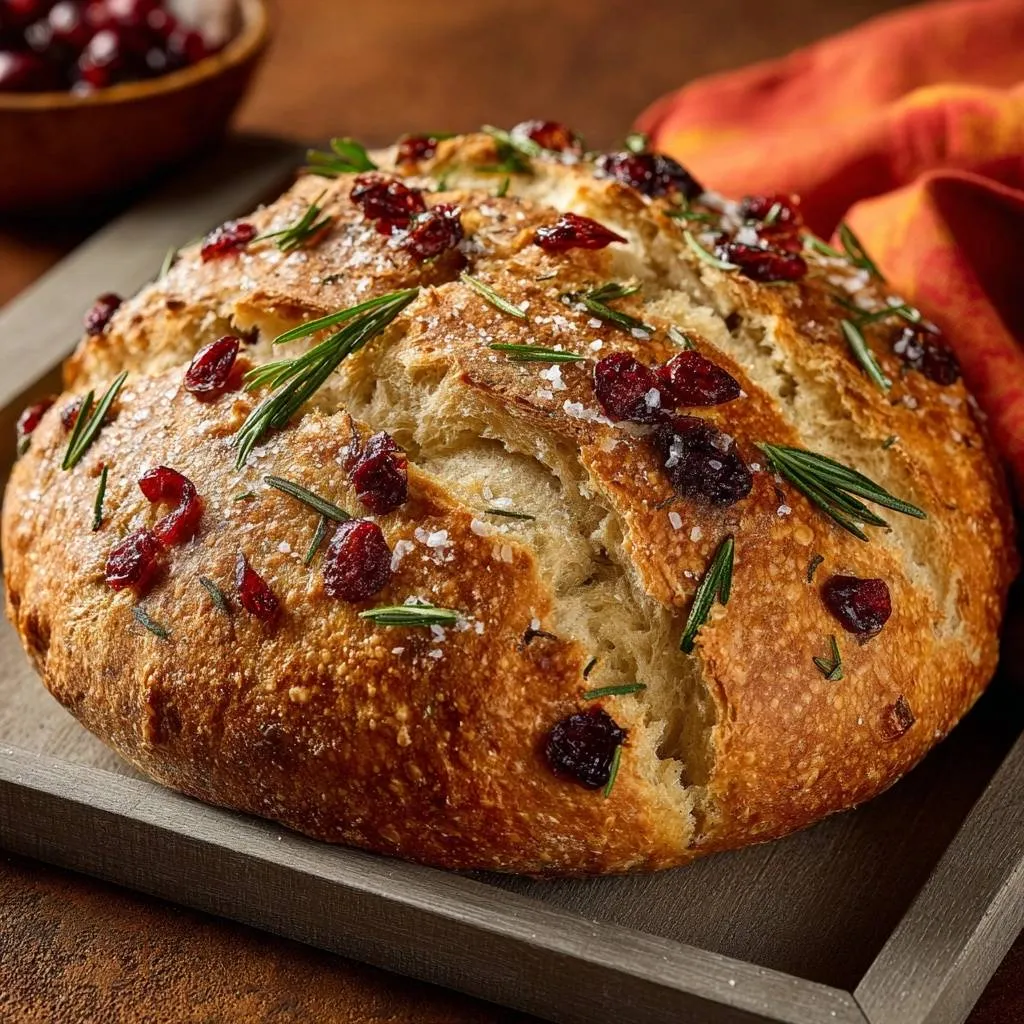
Rosemary elevates plain loaves into something festive. Finely chop it to release oils evenly. In addition, a sprinkle of coarse salt on top sharpens every bite.
For more ideas on using these fragrant additions, explore this rosemary cranberry artisan bread.
No-Knead Method Advantages
High hydration in this Cranberry Rosemary Artisan Bread creates steam pockets for an airy crumb. Traditional kneading tightens gluten too much, leading to chewiness. But here, you skip that for natural development over time.
Busy bakers love the hands-off style. Just 5 minutes of work yields pro results. Plus, the method forgives minor errors better than standard recipes.
Essential Ingredients for Cranberry Rosemary Artisan Bread
Bread flour forms the backbone with its high protein for strong gluten structure. Salt enhances flavors and controls yeast. Instant yeast kickstarts the slow rise without proofing.
Lukewarm water hydrates everything into a sticky dough; don’t worry, that’s intentional for openness. Half a cup of dried cranberries adds chew and tartness. Two tablespoons of fresh rosemary infuse herbal depth, with extra sprigs for garnish.
Coarse sea salt finishes the crust with crunch. For swaps, try spelt flour if you want nuttier notes, but stick to bread flour for best lift. This combo makes Cranberry Rosemary Artisan Bread foolproof.
Bread Flour vs. All-Purpose Choice
Bread flour’s 12-14% protein builds a robust gluten network for chewy crumb in Cranberry Rosemary Artisan Bread. All-purpose often falls flat, yielding gummy texture. Therefore, choose bread flour for that signature pull-apart openness.
Herbs and Fruit Integration Tips
Chop rosemary finely to avoid piney bitterness; stems release harsh oils. Stir cranberries evenly during mixing for uniform distribution. Fresh rosemary packs more punch than dried, so use it fresh for vibrant flavor in your artisan bread.
Science of Crispy Crust in Artisan Bread
Steam from the Dutch oven gelatinizes starches on the surface, allowing massive oven spring in Cranberry Rosemary Artisan Bread. At 450°F, sugars caramelize via Maillard reaction for deep color and shatter. Without it, crusts stay soft and pale.
Preheating maximizes heat retention. Therefore, the lid traps moisture first, then uncovers for browning. Internal temp hits 210°F when starches set perfectly.
Dutch Oven Steam Mimics Bakery Ovens
Covered baking traps the dough’s own steam for rise, mimicking pro steam injectors. Uncover to dry and crisp the surface. Aim for 210°F inside; that’s when retrogradation locks in structure without gumminess.
Long Fermentation Builds Complex Flavors
12-18 hours at room temp produces lactic acid for subtle tang that pairs with cranberries and rosemary. Bubbles on the surface signal readiness. This slow process deepens taste far beyond quick breads.
Equipment Essentials for Perfect Cranberry Rosemary Bread
A 4-6 quart cast iron Dutch oven retains heat and traps steam like nothing else for artisan bread. Parchment eases transfer without sticking. An instant thermometer confirms doneness at 210°F.
Wire rack cools evenly to prevent soggy bottoms. Skip glass lids; they crack under heat. Preheat everything for success in your Cranberry Rosemary Artisan Bread.
Preheating Dutch Oven Precisely
30 minutes at 450°F superheats the pot for instant steam burst. Use thick oven mitts to handle; it stays screaming hot. This step guarantees crispy crust in artisan bread baking.
Step-by-Step: Crafting Cranberry Rosemary Artisan Bread
Timeline spans 18-24 hours, mostly passive. Start with shaggy dough, no kneading needed. Follow phases for bakery results at home.
Phase 1: Mixing Shaggy Dough Base
Whisk flour, salt, and yeast in a large bowl. Add lukewarm water, cranberries, and chopped rosemary. Stir with a wooden spoon until no dry flour shows; it’ll look shaggy and sticky, which is perfect for gluten via autolyse.
Pro tip: minimal stirring preserves hydration. Scrape the bowl bottom to incorporate everything fully.
Phase 2: Overnight Room-Temp Rise
Cover tightly with plastic wrap. Let sit 12-18 hours at 70°F until doubled, bubbly, and dotted with holes. The dough smells yeasty-sweet with rosemary hints.
If cooler, extend to 20 hours. Bubbles mean enzymes broke down starches for flavor.
Phase 3: Shaping Loose Ball
Flour surface generously. Turn out dough and fold edges to center, forming a loose ball. Place seam-side down on parchment, cover with towel, and rest 30 minutes.
Add rosemary sprigs and coarse salt on top. It relaxes for better shape retention.
Phase 4: Dutch Oven Baking Sequence
Remove hot Dutch oven carefully. Lift parchment with dough into pot, cover, and bake 30 minutes. You’ll hear crackles as it springs high.
Uncover and bake 15 more minutes until deep golden; tap for hollow sound or check 210°F. Cool on rack 1 hour. Slicing too soon steams the crumb soggy.
Avoiding Pitfalls in Cranberry Rosemary Artisan Bread
Under-flour your surface and dough sticks everywhere. Early lid removal flattens the loaf by losing steam. Hot slicing turns crumb gummy.
Fix wet dough by folding more during shaping. Calibrate oven temp; too low means pale crust. These tweaks ensure Cranberry Rosemary Artisan Bread perfection.
Fixing Dense or Pale Crusts
Steam escape from poor preheat causes density. Verify 450°F and tight lid seal. Overproofing deflates; if dough doesn’t spring back slowly, reshape and proof 15 minutes less.
Balancing Cranberry Rosemary Distribution
Stir fruit evenly at mix-in to prevent clumps. Fold gently during shaping. Don’t overload; stick to 1/2 cup or pockets weigh down the crumb.
Storage and Revival for Cranberry Rosemary Bread
Store at room temp in a towel-lined bowl up to 2 days. For longer, slice and freeze. Revive stale slices at 350°F for 5 minutes to crisp crust.
Make dough ahead and refrigerate up to 3 days for deeper flavor. Thaw before shaping.
Freezing Whole Loaf Guide
Cool fully, wrap airtight in plastic then foil. Freeze up to 3 months. Thaw overnight, refresh at 350°F 10-15 minutes for fresh artisan bread crispness.
Pairing Cranberry Rosemary Artisan Bread
Pair with goat cheese for creamy tang against cranberry zing. Butternut squash soup loves the herbal notes. Toss into green salads for crunch.
What to Try Next
When you’ve enjoyed your Cranberry Rosemary Artisan Bread, consider these complementing dishes.
- For a truly impressive main course, explore a garlic herb crusted prime rib, a rich centerpiece that pairs well with fresh bread.
- If you’re looking for another dish featuring cranberries, try these cranberry and spinach stuffed chicken breasts for a delightful combination of flavors.
Holiday tables shine with this loaf. Toast for breakfast with almond butter. Tart rosemary cuts spicy dips perfectly.
Cheese and Spread Matches
Brie melts into cranberry pockets beautifully. Sharp cheddar contrasts rosemary earthiness. Whip honey with sea salt for a simple spread that amplifies flavors.
Troubleshooting Cranberry Rosemary Artisan Bread
How do I store Cranberry Rosemary Artisan Bread leftovers?
Keep at room temperature in a towel-lined bowl for up to 2 days to maintain crispness. Refrigerate in a paper bag if humid, but revive in a 350°F oven for 5 minutes. Freeze slices in a zip-top bag up to 3 months; thaw and toast directly for freshness. Whole loaves freeze best cooled fully and double-wrapped.
Why is my crust soft or pale on this artisan bread?
Insufficient preheat or lid removal too soon lets steam escape, preventing oven spring and Maillard browning. Ensure 30 full minutes at 450°F, and bake uncovered 15-20 minutes until deep golden (extend if needed). Check oven calibration with a thermometer; low heat is common culprit. Tap bottom for hollow sound confirming doneness.
Can I substitute ingredients in Cranberry Rosemary Artisan Bread?
Use all-purpose flour but expect denser crumb; bread flour’s protein is ideal. Swap dried cherries for cranberries if tartness overwhelms, or raisins for milder sweet. Dried rosemary works (double amount) but fresh yields brighter flavor. It’s already vegan; no eggs or dairy needed.
Why is my dough so sticky during mixing?
Sticky is normal for high-hydration no-knead dough; adding flour toughens the crumb. Wet hands or oiled spoon helps handling. During shaping, generous flour on surface prevents sticking without altering hydration.
What if my bread didn’t rise enough?
Cold room or old yeast stalls fermentation. Aim for 70°F spot; if under 65°F, extend rise to 20 hours. Instant yeast doesn’t need proofing, but test freshness in warm water first. Bubbly surface confirms readiness before baking.
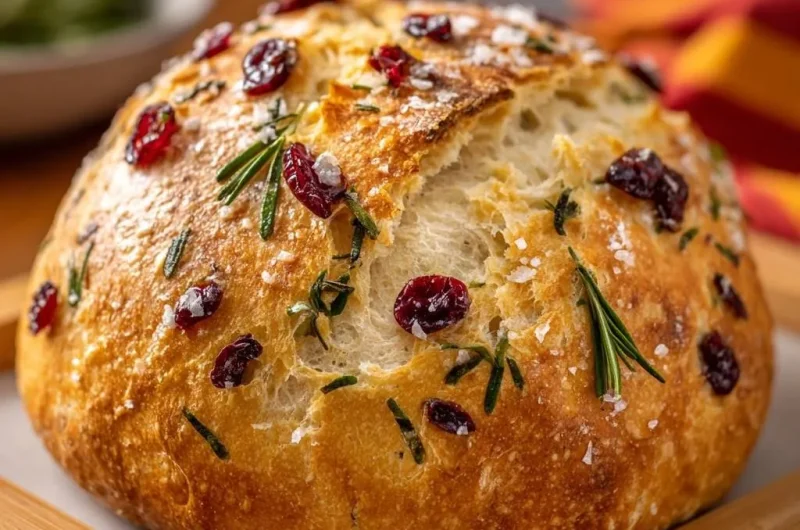
Cranberry Rosemary Bread
Course: BreadCuisine: AmericanDifficulty: medium1
loaf20
minutes45
minutes240
kcal1080
MinutesHomemade bread often ends up with a soft, pale crust that steams away in your oven. This no-knead recipe fixes that forever with a foolproof Dutch oven steam method for that shatteringly crispy, bakery-style crust every single time.
Ingredients
3 cups bread flour
1 1/4 teaspoons salt
1/4 teaspoon instant yeast
1 1/3 cups lukewarm water
1/2 cup dried cranberries
2 tablespoons fresh rosemary, finely chopped (plus extra sprigs for topping)
Coarse sea salt for sprinkling
Directions
- In a large bowl, whisk together flour, salt, and yeast. Add water, cranberries, and chopped rosemary. Stir with a wooden spoon until a shaggy dough forms and no dry flour remains. It will be sticky, do not knead.
- Cover bowl tightly with plastic wrap. Let rise at room temperature for 12-18 hours until doubled, bubbly, and surface is dotted with bubbles.
- Preheat oven to 450 degrees F. Place a 4-6 quart Dutch oven with lid inside to heat for 30 minutes.
- While oven heats, turn dough onto a well-floured surface. Fold edges into center to form a loose ball. Place seam-side down on parchment paper. Cover loosely with a towel and rest 30 minutes. Top with rosemary sprigs and sprinkle generously with coarse sea salt.
- Carefully remove hot Dutch oven. Lift dough by parchment into pot. Cover with lid.
- Bake covered for 30 minutes. This traps steam for massive oven spring and prevents soft crust by mimicking a professional steam-injected oven.
- Remove lid. Bake uncovered 15 minutes more until deep golden and crust is ultra-crispy. Internal temp should reach 210 degrees F.
- Cool on wire rack 1 hour before slicing. Store at room temp up to 2 days.
Notes
- Let dough rise 12-18 hours. Internal temperature should reach 210°F when done. Cool 1 hour before slicing. Store at room temperature up to 2 days.