For years, I struggled with pasta sauces that refused to coat the noodles, pooling sadly at the bottom of the bowl. It felt impossible to achieve that restaurant-quality gloss without heavy cream.
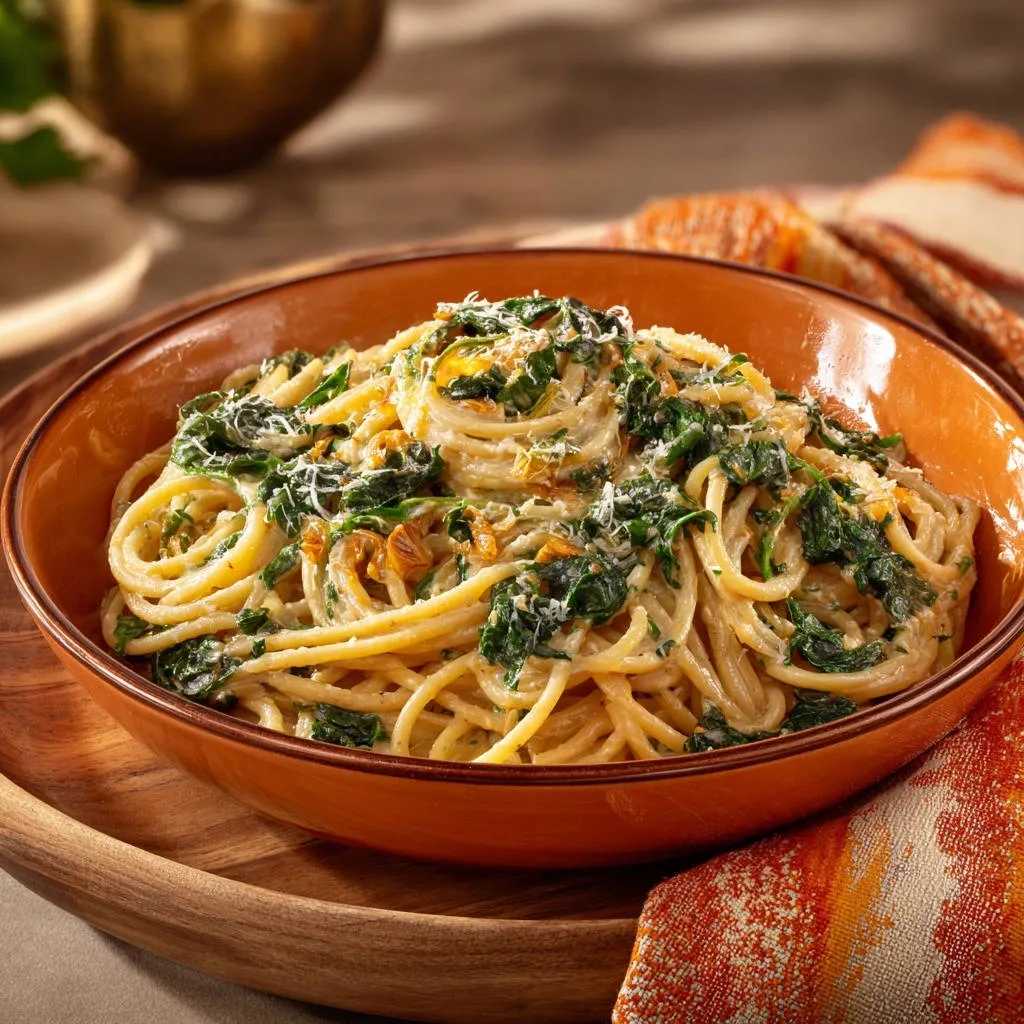
This recipe for Garlicky Creamy Spaghetti with Greens changes everything, using a simple, accessible technique that locks the velvety, flavorful sauce onto every single strand, demonstrating true culinary expertise.
For a heartier pasta experience, explore classic spaghetti bolognese.
Tired of Soggy Pasta? Why This Garlicky Creamy Spaghetti is a Game Changer
The biggest pain point in home pasta cooking is the lack of cohesion-a sauce that slides right off the noodles. This recipe solves that fundamental issue by focusing entirely on binding the sauce naturally.
For a similar comforting pasta experience, explore creamy garlic orzo with a savory crunch.
We leverage the starches released during the cooking process, turning simple ingredients into a rich, glossy coating. This approach ensures maximum flavor adhesion and trust in the outcome.
The Secret Weapon: Creaminess Without Heavy Cream
True creaminess in Italian pasta dishes often comes from an emulsion, not added cream. This technique uses fat (olive oil and optional butter), liquid (starchy pasta water), and solids (grated cheese) to form a stable mixture.
When combined correctly, these ingredients thicken into a lush, dairy-free creaminess that is lighter yet more satisfying than heavy cream.
Unbeatable Texture: Why the Sauce Clings Perfectly to Every Strand
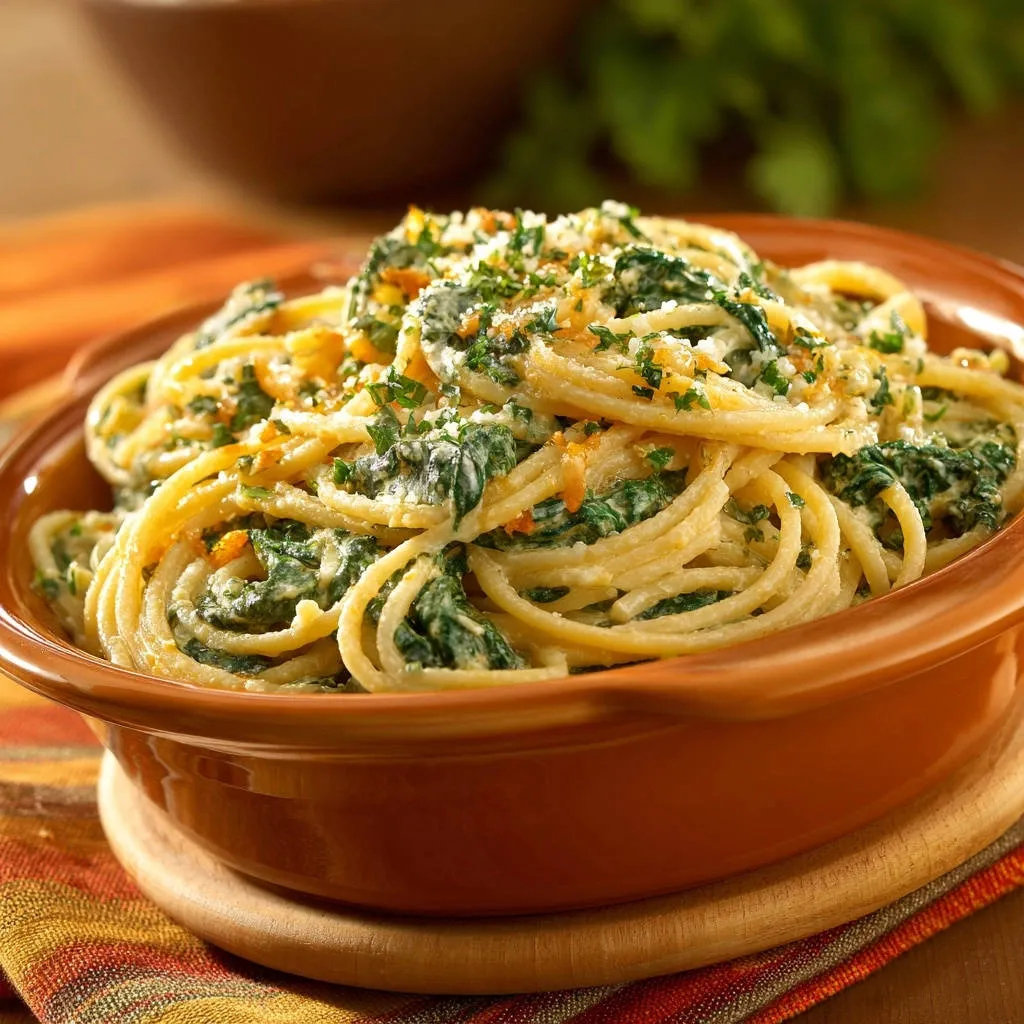
The key to perfect texture is a technique called “Mantecare,” which means to cream or mix vigorously off the heat. This aggressive tossing is critical for incorporating tiny droplets of fat and water into a smooth, cohesive whole.
The high starch content in the reserved water acts as the bridge, ensuring the emulsification is stable and results in that beautiful, clinging, glossy spaghetti.
Time-Saving Flavor: Fast Prep and Maximum Impact
This dish relies on speed and high-impact flavors like fresh garlic and pungent hard cheese. The whole meal comes together in under 30 minutes, making it ideal for busy weeknights.
The process of wilting down the greens adds nutritional value and a fresh counterpoint to the deep, garlicky richness of the sauce.
Building the Perfect Plate: Essential Ingredients and Substitutions
The Starch Source: Choosing Your Best Noodle
While spaghetti works perfectly, choose a quality pasta, ideally one that is bronze-die cut. Bronze-cut pasta has a rough, porous surface that holds sauce far better than smooth, Teflon-die noodles.
What to Try Next
Round out your meal with these dishes that complement the garlic and greens.
- For a crisp vegetable option, try our Crispy Parmesan Roasted Zucchini, offering a delightful crunch.
- Warm up with a bowl of our Creamy Butternut Squash Soup, perfect for its smooth texture alongside the spaghetti.
This rough texture also helps release more starch into the cooking water, which is the cornerstone of our emulsifying technique.
Elevating the Garlic and Greens Duo
Use fresh garlic and slice it thinly and uniformly to ensure it cooks evenly without burning. Garlic is the primary aromatic backbone of this creamy pasta dish.
Spinach wilts quickly and provides a mild flavor, while kale requires slightly longer cooking and provides a heartier, more substantial texture.
The Fat and Salt Foundation: Olive Oil and Reserved Water
Dividing the olive oil-using most to build the flavor base and saving a small amount for a finishing drizzle-maximizes the oil’s aromatic impact.
The reserved pasta water is non-negotiable; its cloudy, starchy nature is the only emulsifier we need. The water must also be sufficiently salty to properly season the final dish.
Essential Kitchen Equipment for Stress-Free Pasta Making
The Importance of a Deep Skillet or Dutch Oven
A large cooking surface is essential for the final tossing (mantecare) step, allowing you to move the pasta freely without crowding.
Tongs for Tossing Mastery
Tongs are the preferred tool for the aggressive stirring needed for emulsification, ensuring the sauce coats quickly and evenly.
Accurate Measuring Cup
You must reserve at least one cup of pasta water, so have a measuring cup ready before draining.
The Mantecare Technique: A Step-by-Step Guide to Clinging Sauce
- Step 1: Prep and Undercook the Pasta (“Just Shy of Al Dente”)
Cooking the pasta slightly less than the package directions is vital because it will continue cooking in the hot sauce mixture, preventing mushiness.
Do not forget to generously salt the boiling water-this is your first layer of seasoning.
- Step 2: Securing the Starch Water (The “Liquid Gold”)
Before draining, scoop out at least a cup of the murky, starchy water. This high-starch liquid contains the emulsifiers needed to bind the sauce without cream.
- Step 3: Building the Garlicky Base
Ensure your skillet is adequately warmed over medium heat. When slicing the garlic, aim for thin, even pieces, and watch it constantly-burnt garlic is bitter and will ruin the dish.
- Step 4: Wilt and Season the Greens
Add the spinach or kale in batches if necessary, stirring until they fully collapse. Season them lightly now, as they lose volume and the seasoning will concentrate.
- Step 5: The Cling Hack (Emulsification)
Add the hot, drained pasta, the reserved water, the cheese, and the butter (if using) directly into the skillet. IMMEDIATELY remove the skillet from the heat.
- Step 6: Mantecare: Aggressively Toss for Gloss
Using tongs, vigorously toss and stir the pasta for 30 to 60 seconds. The constant motion and residual heat will bind the starches, fat, and cheese into a thick, glossy emulsion.
If the sauce looks too tight, add additional pasta water a tablespoon at a time. If it looks too wet, add a tiny bit more cheese.
- Step 7: Final Adjustments and Serving
Taste the final product and adjust the salt and pepper as needed. A final drizzle of fresh olive oil at the end adds a beautiful aroma and sheen.
Chef’s Secrets: Elevate Your Garlicky Creamy Spaghetti with Greens Game
The Parmesan Quality Check
Always grate your Parmesan or Pecorino fresh. Pre-shredded cheese contains anti-caking agents that inhibit proper melting and will prevent the sauce from emulsifying cleanly.
Controlling the Heat for Perfect Emulsification
Crucially, the Mantecare step must happen off the heat. If the pan is too hot, the cheese will seize up and become stringy instead of melting smoothly into the sauce.
Using Butter for Maximum Richness
The optional butter doesn’t just add fat; it introduces dairy proteins which further stabilize the emulsion, providing a deeper, restaurant-style richness.
Troubleshooting and Mastering Your Garlicky Creamy Spaghetti
Problem: The Sauce is Breaking (Looks Greasy or Separated)
This usually means the temperature was too high when the cheese was added. To fix it, remove the pan from the heat entirely and vigorously stir in a tablespoon of cold, fresh pasta water to shock the emulsion back together.
Problem: My Garlic Tastes Bitter
Garlic has been burned. This cannot be easily fixed. Next time, ensure the heat is kept at a medium-low level and remove the garlic immediately if it begins to brown past a light golden hue.
Problem: The Finished Dish is Too Dry and Sticky
This means you didn’t add enough liquid during the final toss, or the dish sat too long before serving. Add a few more tablespoons of hot pasta water (or even plain hot water) and toss aggressively again until the sauce loosens up and re-clings.
Serving Suggestions, Storage, and Quick Make-Ahead Tips
Ideal Pairings: Grape juice and Side Dishes
This rich dish pairs beautifully with crisp, acidic white grape juice like sparkling grape juice to cut through the creaminess. Serve alongside a simple lemon vinaigrette salad to balance the flavors.
Reheating Spaghetti Without Losing the Cling
Pasta with emulsified sauces does not reheat well in the microwave. Instead, reheat small portions in a skillet over low heat, adding 1 to 2 tablespoons of water or broth while stirring until the sauce loosens up and clings again.
Your Quick Guide to Common Questions (FAQ)
Can I Add Protein to This Dish?
Yes, cooked chicken, shrimp, or crumbled Italian sausage make excellent additions. Add the pre-cooked protein during Step 4 to warm it through before adding the pasta.
What if I don’t have fresh Parmesan?
You can substitute with Pecorino Romano for a sharper, saltier flavor. However, avoid pre-grated Parmesan in the shaker container, as its ingredients prevent the proper melting needed for the sauce.
Is this recipe freezer friendly?
No, pasta dishes with emulsified or dairy-based sauces do not freeze well. The texture of the sauce and the pasta will degrade significantly upon thawing. It is best enjoyed fresh or stored in the refrigerator for up to three days.
Ready to Impress? Share Your Garlicky Creamy Spaghetti Masterpiece!
We hope this definitive guide helps you conquer the creamy pasta challenge once and for all. Mastering the cling hack transforms this Garlicky Creamy Spaghetti with Greens from a simple meal into a show-stopping dish your family will request weekly.
Don’t forget to take a picture of your glossy, perfectly coated pasta and share it with us!
Happy cooking!
Garlicky Creamy Spaghetti
Course: Main CourseCuisine: ItalianDifficulty: easy4
servings10
minutes15
minutes550
kcal25
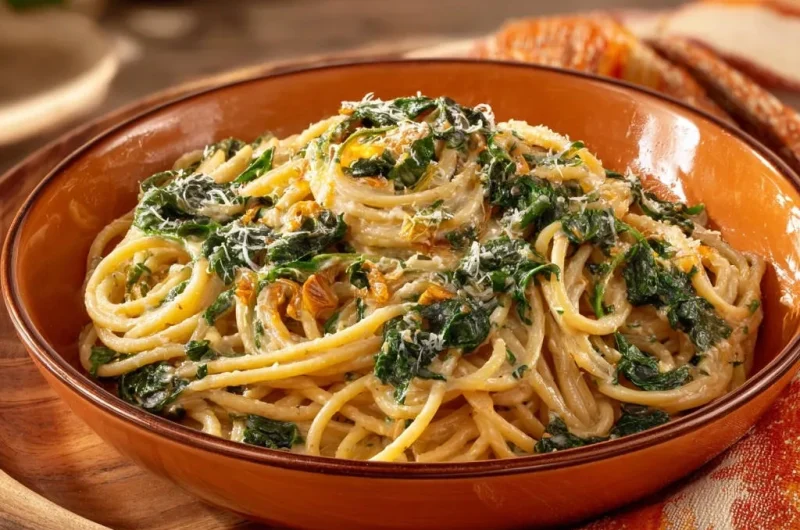
minutesTired of sauces that slip off your pasta? This recipe eliminates that disappointment by teaching you the crucial emulsification hack used by restaurants. Using just starchy pasta water, cheese, and fat, you’ll create a thick, glossy, cohesive coating that clings perfectly to every single strand of garlicky spaghetti.
Ingredients
1 pound spaghetti or linguine
4 tablespoons olive oil, divided
6 cloves garlic, thinly sliced
10 ounces fresh spinach or kale, roughly chopped
1/4 cup reserved pasta cooking water, plus more as needed
1/2 cup finely grated Parmesan or Pecorino cheese, plus more for garnish
2 tablespoons unsalted butter (optional, for richness)
Salt and freshly ground black pepper to taste
Directions
- Cook the Pasta: Bring a large pot of salted water to a rolling boil. Add the spaghetti and cook until just shy of al dente (about 1 minute less than package directions). Crucially, before draining, scoop out at least 1 cup of the starchy cooking water and set it aside. Drain the pasta thoroughly.
- Build the Flavor Base: While the pasta cooks, heat 3 tablespoons of olive oil in a large, deep skillet or Dutch oven over medium heat. Add the sliced garlic and cook for 1 to 2 minutes, stirring often, until the garlic is fragrant and lightly golden brown. Be careful not to burn it.
- Wilt the Greens: Add the chopped spinach or kale to the skillet. Season lightly with salt and pepper. Cook, stirring occasionally, until the greens have fully wilted down, about 2 to 3 minutes. Turn the heat to low.
- THE CLING HACK (Emulsification): This step guarantees the sauce sticks. Add the drained pasta directly into the skillet with the greens and garlic. Add the reserved pasta water, the grated cheese, and the optional butter.
- Toss and Mantecare: Remove the skillet from the heat completely. Using tongs or a large spoon, aggressively toss and stir the pasta for 30 to 60 seconds. The residual heat from the pasta and the pan, combined with the continuous motion, will cause the starchy water, fat (oil/butter), and cheese to emulsify instantly. You will see the thin liquid transform into a thick, glossy, cohesive coating that clings perfectly to every noodle. If the sauce looks too thick, add another tablespoon of pasta water at a time until you reach your desired creamy consistency.
- Finish and Serve: Taste and adjust seasoning with salt and pepper. Serve immediately in warm bowls, topped with an extra sprinkle of grated cheese and a drizzle of the remaining tablespoon of fresh olive oil, if desired.
Notes
- The key to success is aggressive off-heat tossing (Mantecare) to emulsify the sauce. Do not skip scooping the pasta water.